
A pair can have every shot in its repertoire and still have no shape. Both players move toward the same ball. On the next point neither moves. Under pressure, the absence of an agreement begins to look like a difference in character.
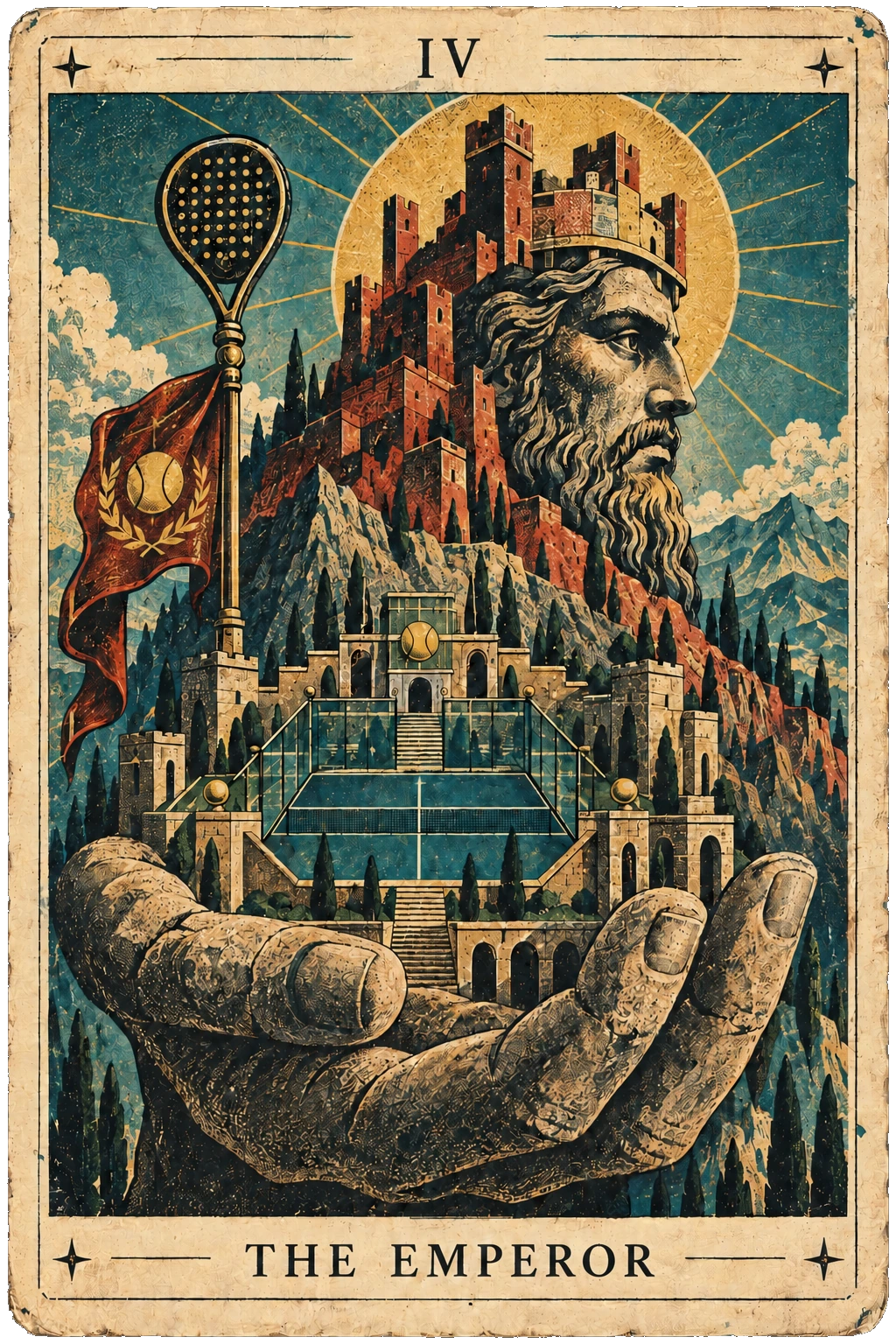
The Emperor's card builds an imposing answer to shapelessness: a stone-like head rises into a fortified landscape, the city held high above a court of ordered lines. There is protection in its architecture, and there is a height from which it might become hard to hear anyone below.
Useful structure in a real match is usually less grand. Agree who will take a ball through the middle. Decide when to speak after a mistake and when to let the next point begin. A clear plan gives two players a place to meet, especially when nerves make each instinct narrower. Accountability can be a kindness when it is shared.
The agreement can change. If opponents keep playing toward one partner, the pair may shift their positions, protect a vulnerable space, or choose a calmer return. An Emperor at work is not the player who never revises a plan. It is the one who makes revision possible without turning every adjustment into a contest for control. Authority in a partnership can be offered to the player with the clearest view of this particular ball, then offered back on the next one.
Then the plan meets a different opponent. One player insists on the arrangement long after it has stopped working, or uses the word discipline to make every question sound like disloyalty. A structure built to support the pair becomes a throne for one person's certainty. Its walls protect an identity more carefully than they protect the game.
The agreement has done its work when two players can act within it and speak when it needs to change. A useful structure gives the game room to happen.