
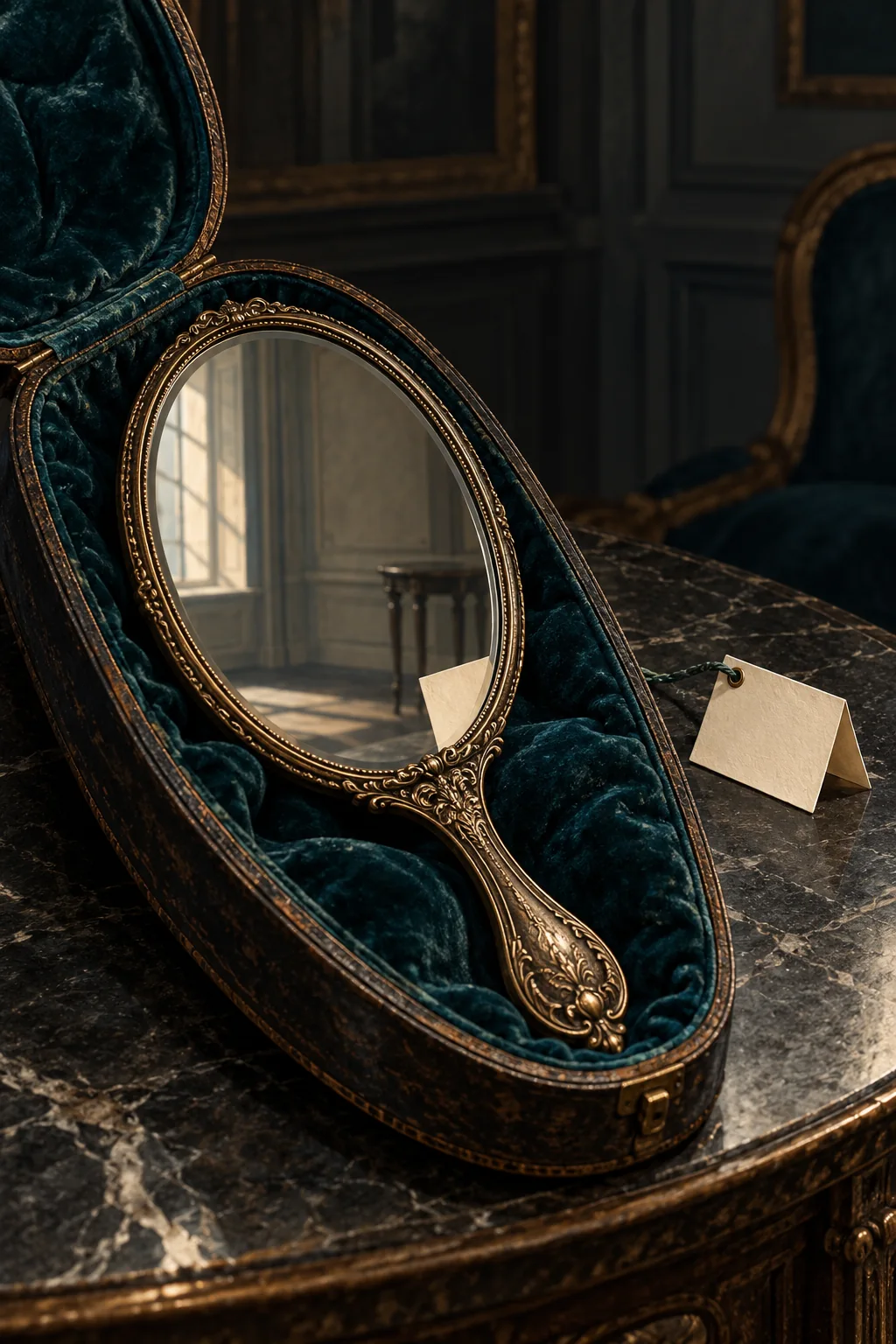
By the window, the pale cloth looks blue. Under a lamp it warms towards gold. Put the same card on each part and its colours seem to answer differently, although nothing printed on it has changed.
The Cloth of No Colour takes this ordinary uncertainty further. In the Tales, it changes with the cards and absorbs the mood carried to the table. Nobody supplies a colour it can reliably call its own. Visual Schools name it the impossible neutral background.
A quiet surface can help the eye. It can make a small detail visible and give three busy images room to be seen together. That useful choice survives even if the stranger claims about the cloth are inventions.
Consider a reader arriving after an argument. They notice a turned back, a dark passage, the distance between two figures. Someone arriving with good news might linger over the opening beyond them. Reader’s Weather enters before either person offers an interpretation; the High Priestess and the Moon stand close to this shifting attention.
Naming the argument gives the first reader something firmer than claiming that the cloth has absorbed it. They can look again, perhaps seeing a detail they passed over. The background remains useful. It has made the cards easier to see without making the person looking disappear.