
A missed smash is a failed attacking overhead: the shot you hoped would finish the point has ended it for the other pair. This page is about the decision and the exchange that follow. One miss, even an apparently easy one, does not tell you which part of your technique needs changing.
Was the high ball a finishing opportunity?
The LTA’s guide to overheads distinguishes the power of a smash from a bandeja used to retain net position. A high incoming ball therefore does not always ask for maximum force. The ball’s depth and your ability to get into position matter to what you can attempt; the name of the shot cannot settle that decision for you.
For a later review, describe the moment before describing yourself: “I was still moving back when I decided to finish.” Then ask what you were trying to make the shot do. If the same miss keeps returning, bring that specific situation to a coach who can see it. Our bandeja explanation explores the alternative purpose; neither page can diagnose a swing it has not observed.
After the attempt
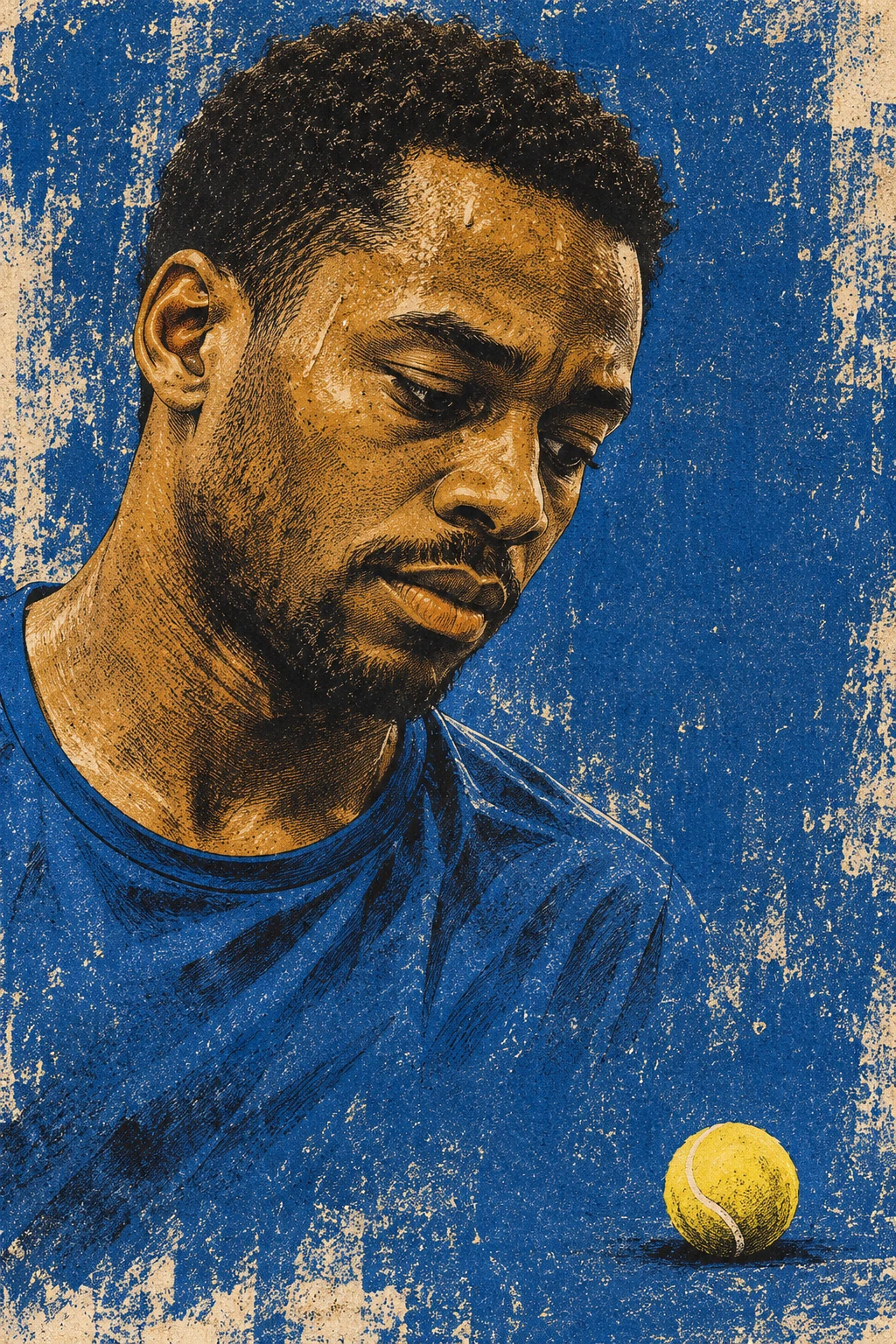
The smash has gone into the net. In this imagined point, the player had seen a high ball as permission to finish. The swing was committed. The result was small and immediate: a ball falling on the wrong side, an opponent already waiting for the next point.
The force of the attempt can make the miss feel disproportionate. A return pushed wide may be remembered as a mistake; this one can feel like an exposure. For a moment, the player wants the whole court to know how much better the shot should have been.
His partner says nothing. He starts to explain anyway: the bounce, the light, the ball that arrived closer than expected. Some of that may be true. What matters to the partner now is whether the explanation has left room for two people to play the next point.
Strength meets him here, with the feeling still alive. In the Oracle, power can be held in relationship without being denied. Frustration does not have to become the partner’s burden. Nor does it have to be pressed into a smile that leaves it waiting to escape elsewhere.
The ball comes back. He is still annoyed when he takes his place. His partner meets his eye, and he answers. That small exchange has survived the larger stroke.