
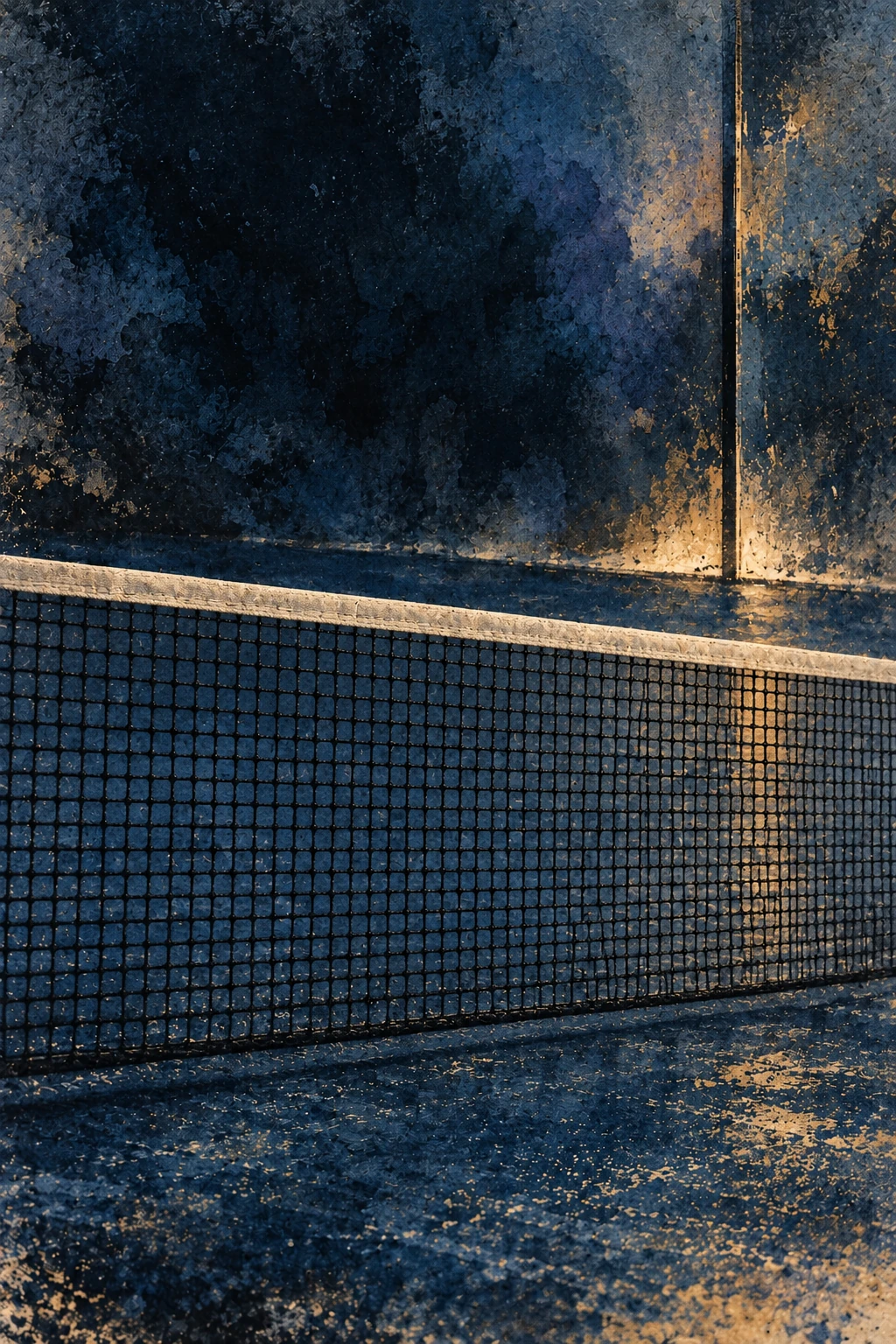
At low light the net is still easy to recognise. The space beyond it is less settled. A shoulder turns, a hand rises, and the eye supplies the rest before the shape has become clear.
Widely told accounts describe a court where familiar positions feel changed. Its edges cannot quite be trusted. Certainty is often the first thing to arrive there, although accurate sight is slower.
Moon readers value the interval. They listen for the impression that has not yet become an explanation. Sun-aligned Schools prefer direct language: ask what happened, name what remains unclear, bring the account into better light. Each risks losing something the other has noticed.
Imagine a partner saying “leave it” as a ball passes. Afterwards, you remember an irritated voice; they remember making room for you. Perhaps the call was sharp. Perhaps expectation sharpened it in memory. The disagreement is small enough to ask about and large enough to follow both players into the next point.
The Moon, the High Priestess and the Silent Card are named beside this court. They leave space for an impression without granting it another person’s intention. For now the account has two voices, and one unresolved word.