
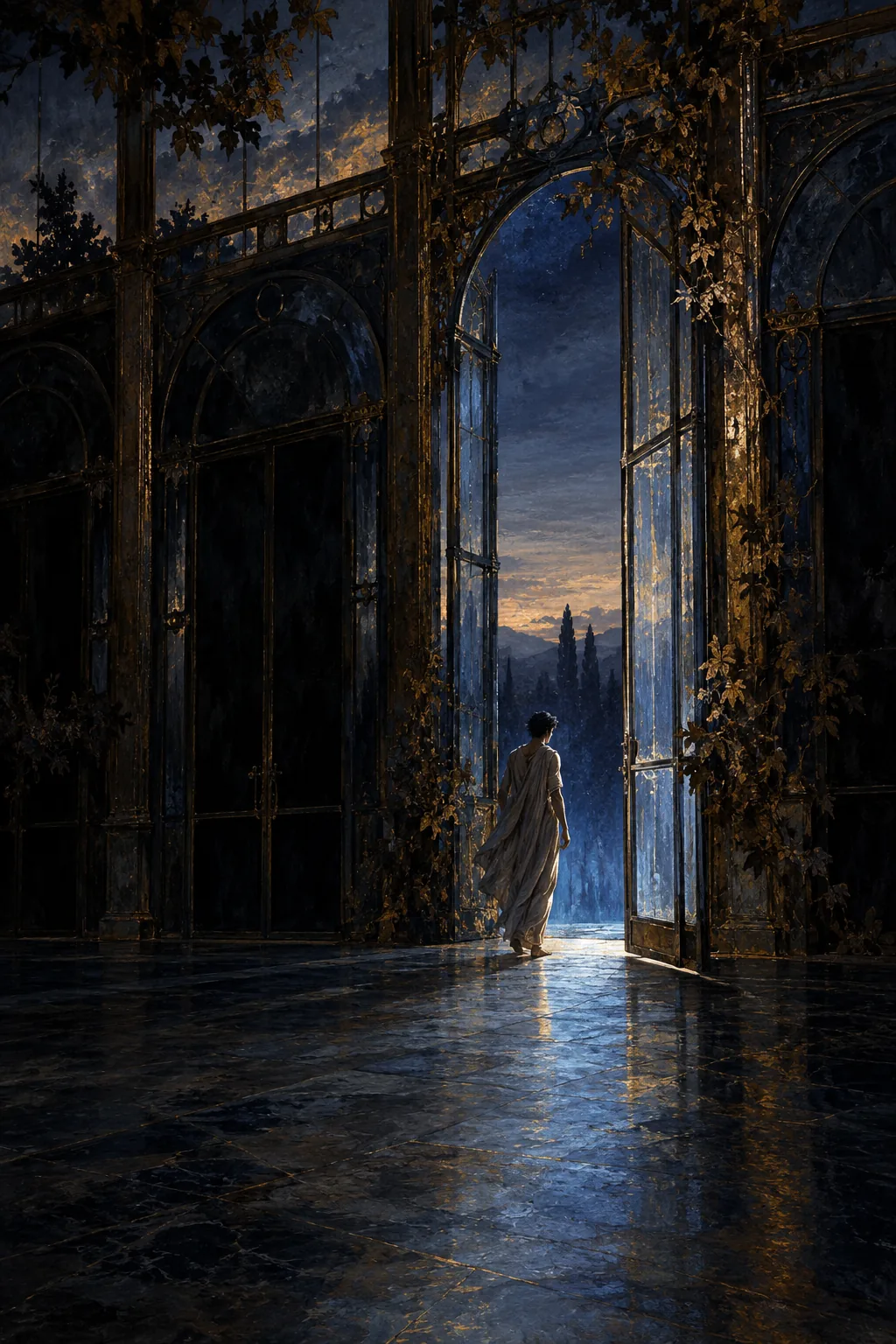
At the end of defeat, one saying places a court still open after the others have gone dark. Another says it appears only when victory no longer matters. A third calls the same opening surrender.
The fragments share a gate and very little else. A reader arriving with hope may hear a promise of another beginning. Someone exhausted by trying may hear permission to stop. Neither can point to a complete account that settles what waits inside.
The World, Death and Judgement stand near the Last Open Court. Something has reached its end; what follows may require a different form. The old partnership cannot always be resumed, the refused apology cannot be made accepted, and one remaining conversation may repair only a small part of what happened.
Before entering, there are ordinary things to consider. Who will share the cost? What has changed enough to make this possible? What would declining allow? The light beyond the gate offers no answer on anybody else’s behalf.
A last option can be precious. It can also be the wrong one. The story has room for a person who walks through and for one who turns towards home.
The gate remains open in the fragment. Their choice belongs beyond its last line.