
A player calls early, moves toward the ball and chooses a height that gives their partner time. Nothing about the point looks miraculous. Yet several separate skills have arrived together at precisely the right moment. That is closer to the Magician than a spectacular winner.
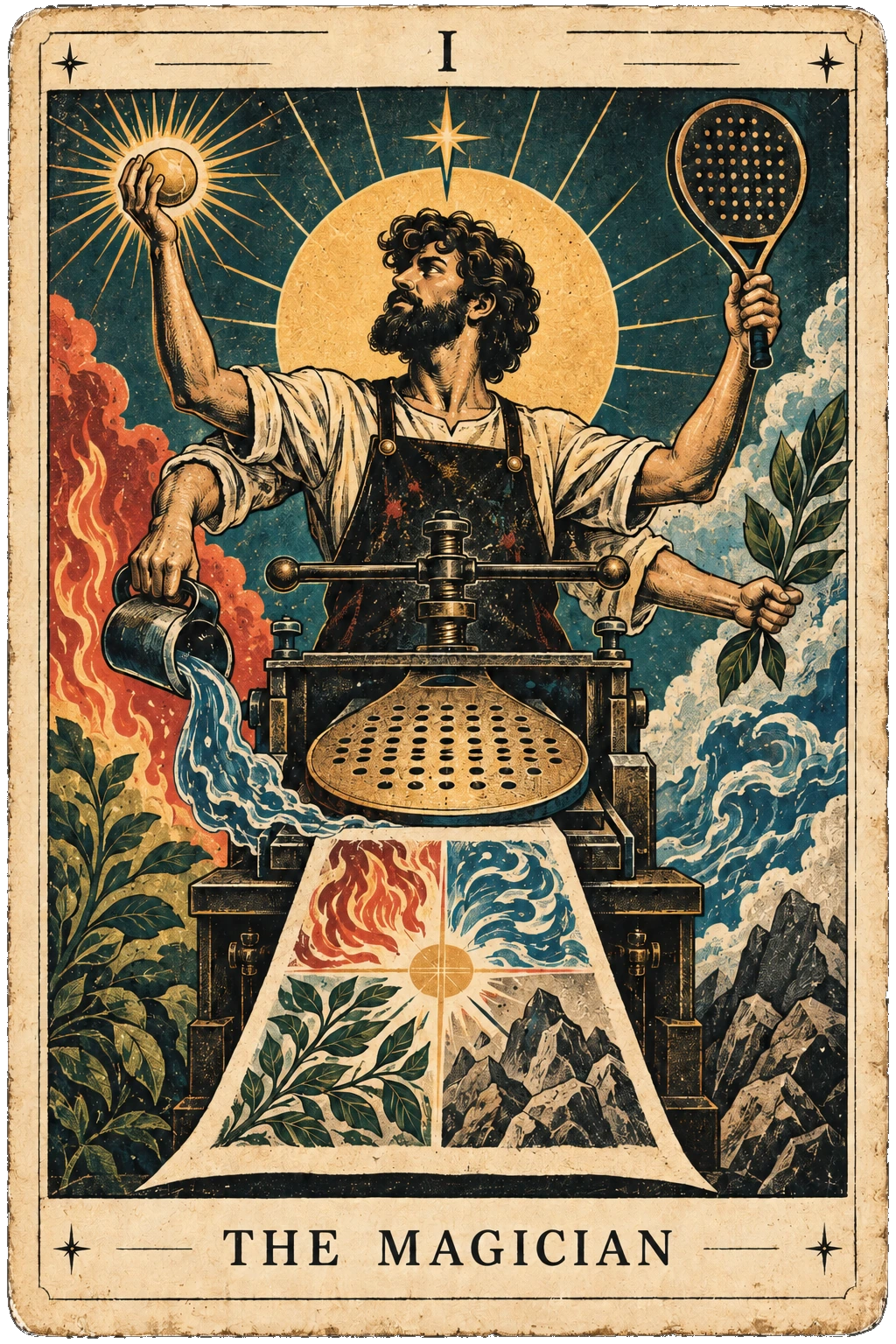
On the card, a figure works at an altar made from the game's materials. One hand raises light; the other holds a racket. Fire and water divide below and find their way back into relation. The image gathers intention, instruments and timing into one act.
There is pleasure in recognising your tools. You have practised footwork, learned how the glass changes a return, and discovered which short call settles the partnership. You do not need all of those things to be perfect before they become useful together. One deliberate choice can change the shape of a rally.
This kind of agency has limits that make it more interesting. The opponent can answer brilliantly. A partner can see a route you missed. The Magician does not command the whole court; they put preparation in contact with a situation that remains alive. Sometimes the most skilful act is a simple return that keeps the pair in the rally, rather than a shot that announces who planned it.
But command can turn into theatre. You attempt the ingenious shot because someone is watching, or try to control a partner's every movement because you fear what happens when you cannot direct the point. A player can seem fluent while becoming less able to respond to the ball actually arriving. A deliberate ball, played for the rally rather than the audience, is a modest kind of magic.