
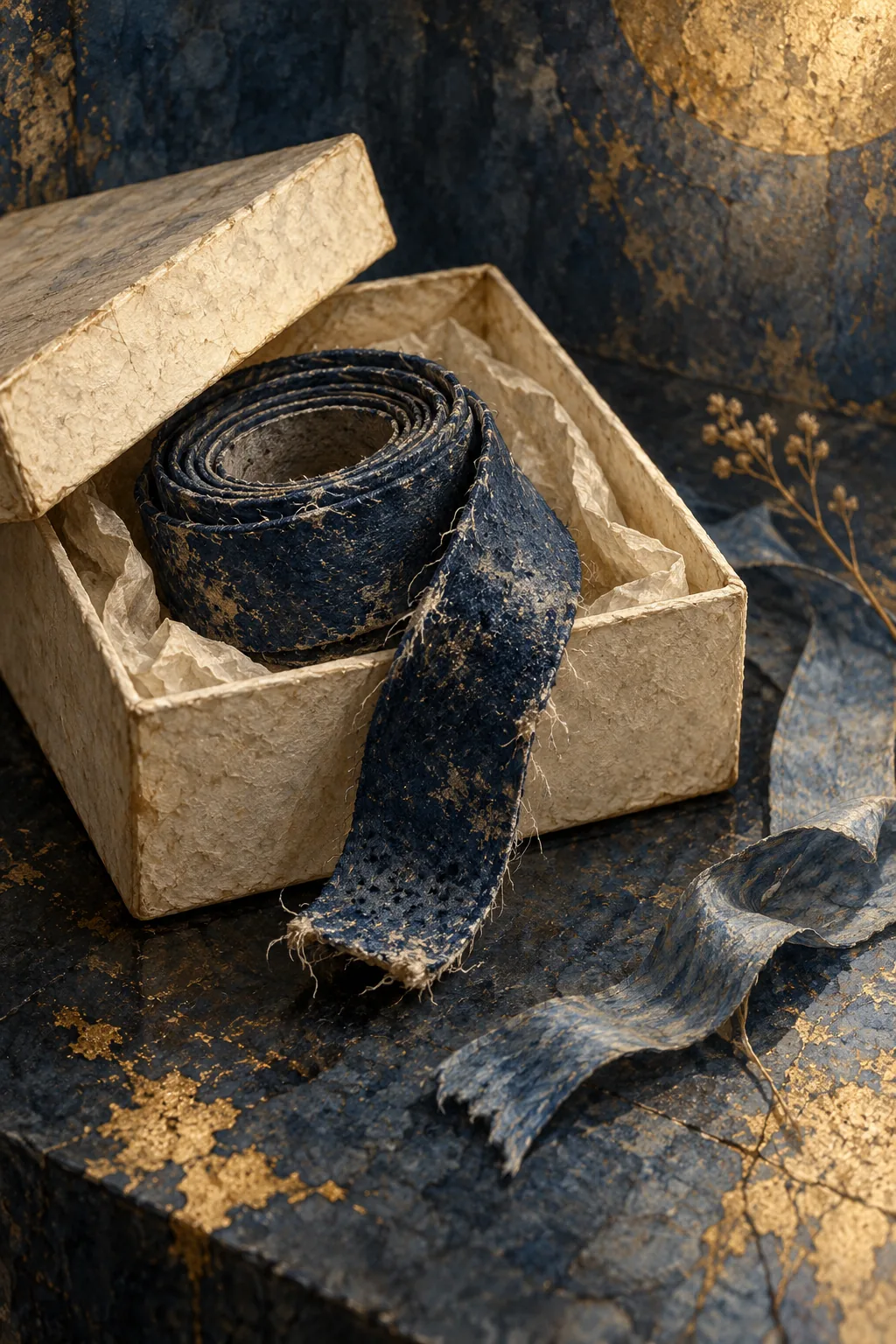
Uncoiled, the overgrip is dark where a hand kept finding it. Its edges are frayed. It has been saved from an early racket, although almost nobody but its owner would think to save it.
Imagine opening the box years later. Before any great point comes back, there is a less impressive memory: not quite knowing where to stand, missing a ball that seemed easy, wanting another try anyway.
The Fool belongs close to this ordinary witness. So does the Sixfold idea of beginnings. The grip recalls a hand learning something it could not yet do; the beginning mattered before it could look accomplished.
That is the generous account. In another, the early days become impossibly bright. Play was freer then, the owner says. Every present frustration is measured against a past from which frustration has quietly been removed.
The same small object can lower the stakes or raise them.
Some touch an old grip before a difficult return. Several Schools discourage treating it as lucky: a familiar texture may steady attention, but it cannot alter the chances of the ball. The useful memory might be the willingness to try while still being clumsy.
Fold it away and there is a current racket to pick up. Its grip has not yet acquired this history.