
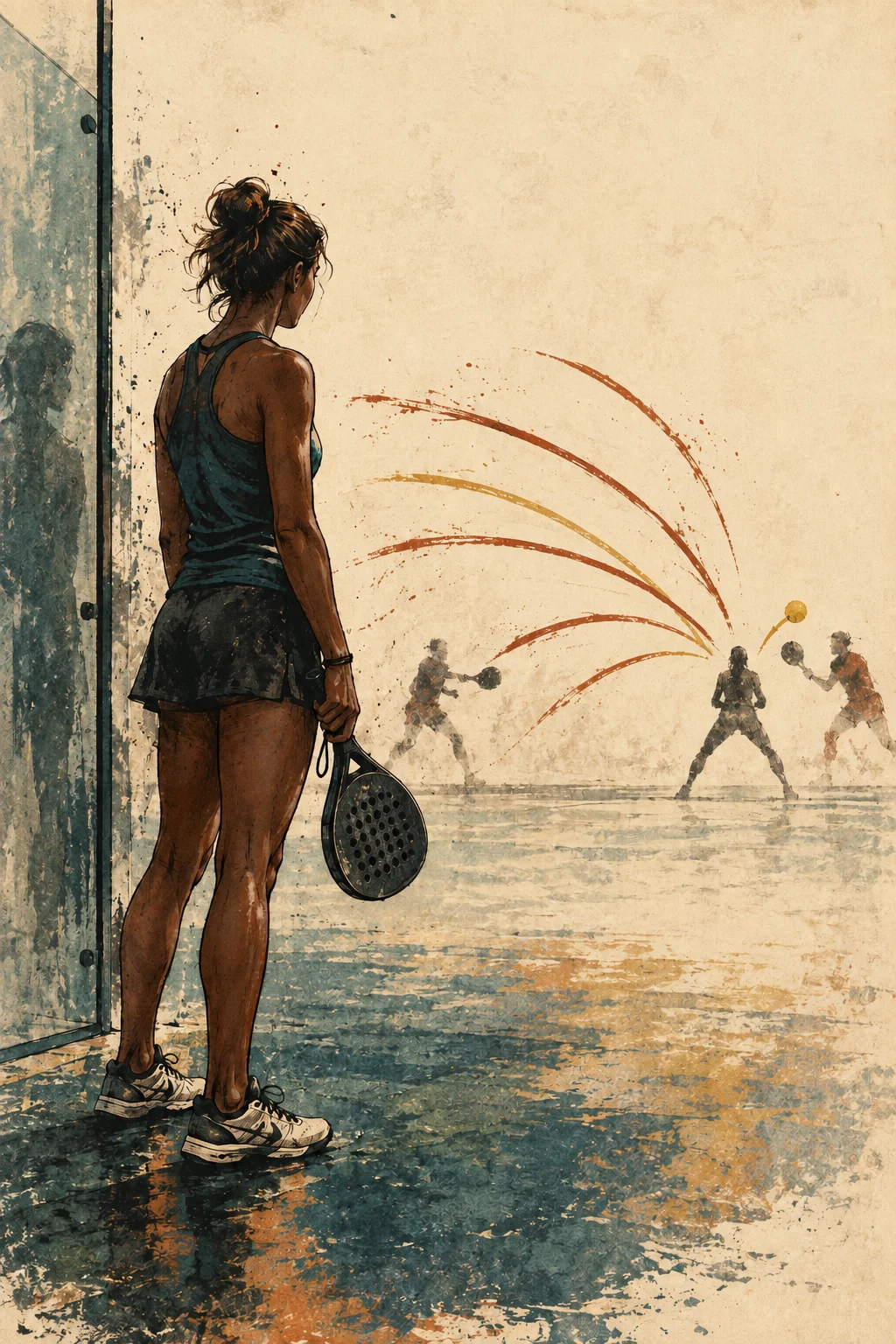
In padel, la nevera—Spanish for “the fridge”—means directing most balls towards one member of the opposing pair, leaving their partner with little to hit. The player left waiting is the one “in the fridge”. It is a doubles tactic, not a separate rule or a verdict on either person’s worth.
Why opponents use the fridge tactic
The public introduction to Training Padel’s fridge-tactic guide describes opponents concentrating play on the player they regard as weaker. That is their tactical assessment, not proof of either player’s ability. Nor does a quiet stretch establish that you are being deliberately excluded: one rally gives you less evidence than a repeated pattern across several points.
The imbalance creates two different jobs. One player keeps making contact and recovering; the other has to stay involved while receiving fewer balls. Counting only the shots can make the second player’s part disappear.
Responding as a pair
Start by naming what you can both observe: “Most of their returns are coming to your side.” That gives you something more useful to discuss than “They think you’re weak” or “You’re not letting me play.”
- If you are receiving most of the balls: tell your partner what help you need. You might ask for an earlier call on the middle ball, or agree to discuss the repeated pattern at the change of ends.
- If you are being left out: ask before trying to take over. “Which balls would you like me to call for?” leaves your partner a say in the response. A ball finally reaching you does not need to repay every ball that went elsewhere.
- For a tactical change: consider the directions you are giving the opponents, not just their preferred reply. The Padel School’s “How to Avoid the Fridge” highlights shot direction as one way to influence the pattern. No single direction makes the next reply compulsory.
In a social session, there is another conversation available: what do the four of you want from the booking? If everyone wants varied involvement, say so. An agreed friendly-game preference is different from expecting opponents in a competitive match to share the ball evenly.
The player left waiting
Imagine a player near the glass, racket ready, watching another exchange pass them by. When a ball finally comes, they reach for too much. Their partner, who has been working through return after return, hears the resulting apology as another task.
Neither has asked what the afternoon feels like from the other position. The waiting player thinks, I have become unnecessary. The busy player thinks, I am being watched fail. The score contains neither sentence.
The Moon gives this uncertainty an image. A feeling can be real while its explanation remains untested. The Lovers brings the partnership back into view: two distinct people choosing how to share a game that is giving them unequal work. These are Oracle interpretations of the moment, not explanations of the opponents’ intentions.
“I’m getting impatient,” the waiting player says. Their partner answers, “I’m getting tired.” For the first time in several points, both accounts are on court.
The opponents may send the next ball to the same person. The pair now have something more to respond to than the distribution of shots.