
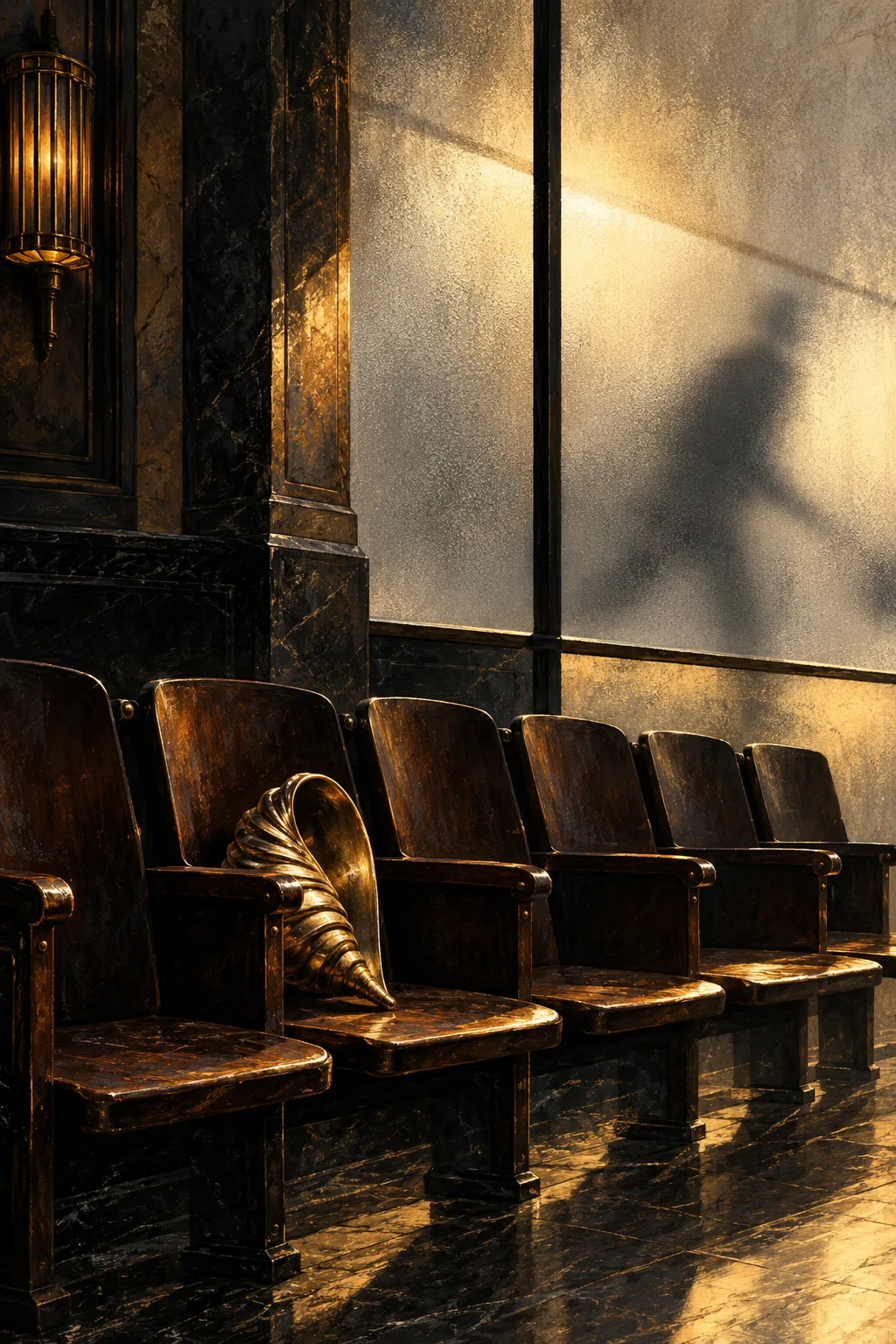
A ball strikes glass. A shoe stops sharply. Someone laughs. From the Blind Side Gallery, the movement between those sounds is out of sight.
Imagine the spectators comparing accounts afterwards. One heard hesitation: a player stopped and left the ball. Another heard an attempt to cover: the player moved, then checked their step. A third remembers the laugh most clearly and builds the point around it. Each begins with something that happened. Each supplies a different connection.
Archivists use this gallery when Famous Readings acquire incompatible histories. Once the outcome is known, the missing turn becomes easier to describe. It can become more vivid with every retelling, although nobody has gained a better view.
Image-led Schools distrust the lesson. A gallery defined by its blind spot, they argue, gives absence too much authority. The witnesses did hear something; their fragments should not all be discarded because the account is incomplete. Justice and the Moon remain close here, holding the claim beside the uncertainty.
The players can be asked. They may remember different things too. Perhaps one answer will explain the stopped shoe. Perhaps the laugh belonged to a moment the spectators never considered.
For now, there are three accounts of the point and a place in each where the movement should be.