
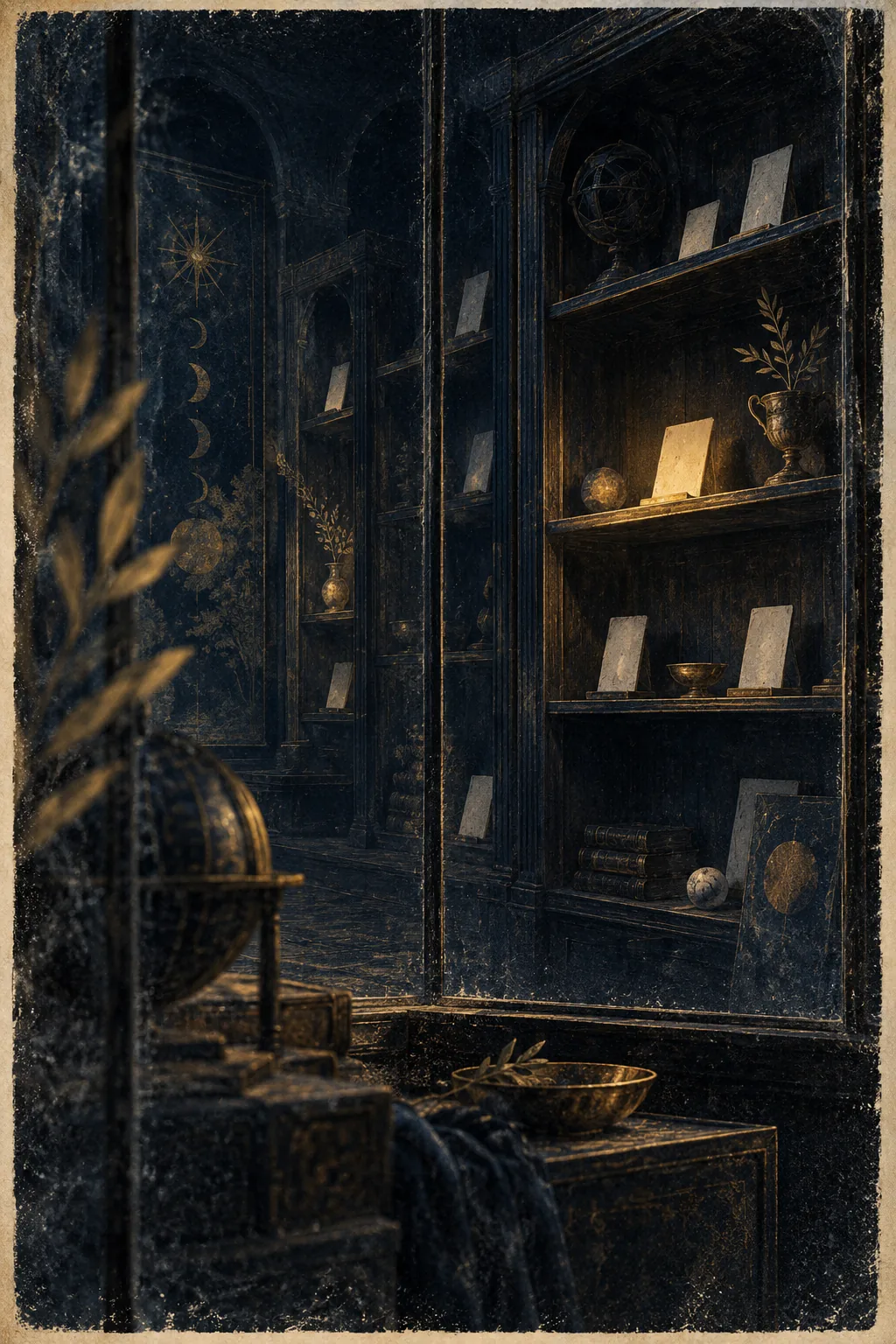
Behind the glass, the story says, there is a long room where returning cards wait between readings. A card absent for months may be there beside one seen yesterday. No account agrees on who keeps the room. Some cannot agree that it has a door.
The fragments in which the cards choose their own departures are the easiest to remember. A familiar face appears in a new spread, and for a moment the room seems very near.
An archivist tells it differently. The card has returned to the table; the earlier encounter has returned to the person looking at it. On the shelf are the question they asked, the answer they hoped for and whatever happened afterwards. The new reading must make room for all of them.
These versions place the waiting on opposite sides of the glass.
Think of a card last drawn before a difficult conversation. When it comes again, the conversation may be over. A sentence that once felt urgent may now seem beside the point. Or the same unfinished matter may be there, although much else has changed. Recognition happens quickly; noticing the difference takes longer.
The Wheel of Fortune and Judgement belong near this room: a return, then the question of what to answer now. The House gives that return a place in the imagination. Its uncertain address offers no evidence that a card has been following anyone.
The card lies among two others on the table. A remembered conversation has come with it. The other two cards are still waiting to be looked at.