
If another card had appeared. If the question had been asked differently. If another reader had been sitting at the table.
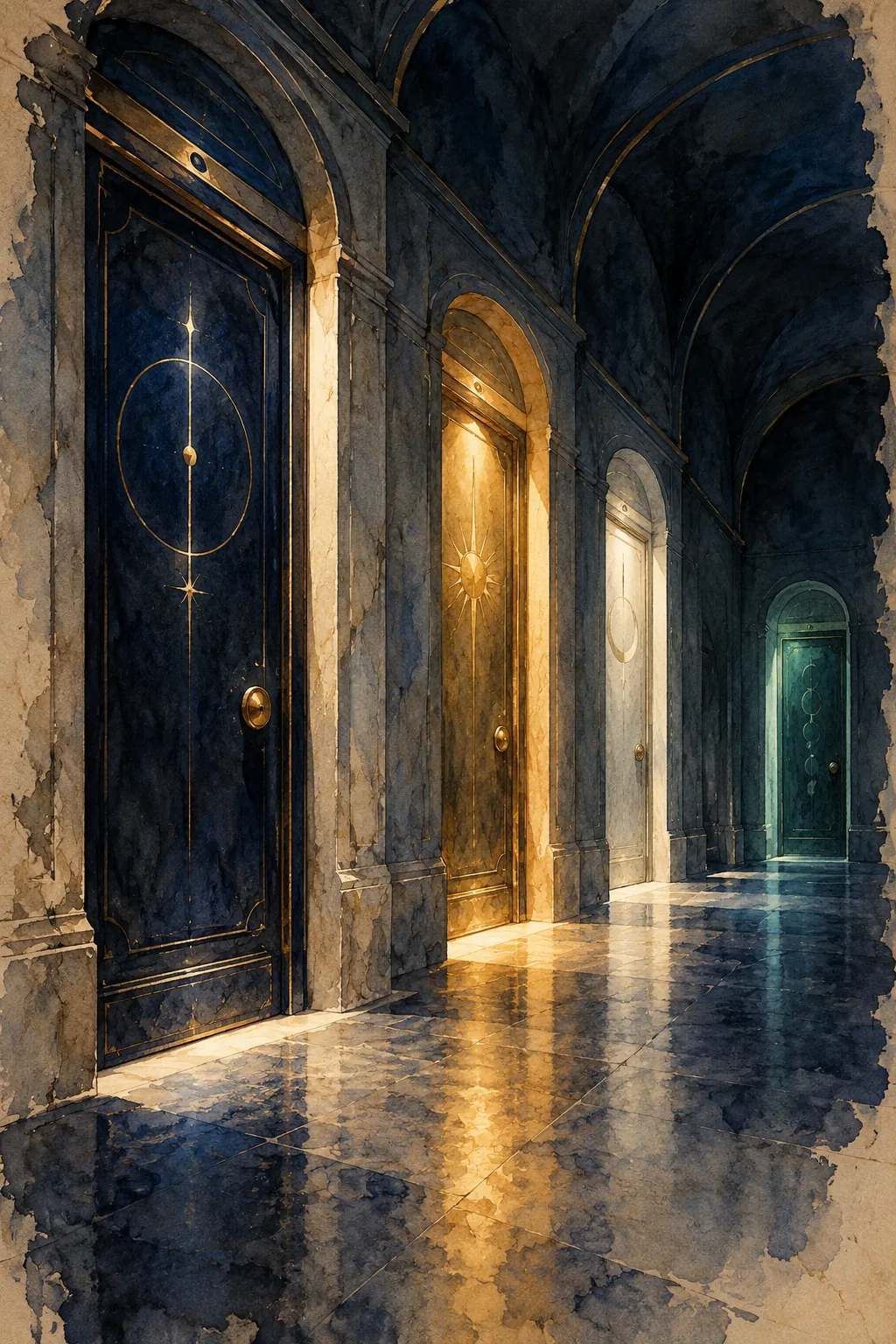
The Corridor of Second Answers gives these possibilities doors. An answer that once seemed inevitable becomes one room among several. Further along, a kinder interpretation may be waiting. So may an account made persuasive only by knowing how everything turned out.
No door leads back to the original reading. That is the stubborn feature of this possibly invented place. A person can reconsider what they saw; the action taken under their first account has already entered somebody else’s life.
Some Schools walk the corridor to loosen certainty. Others hear in its endless alternatives a reader postponing any answer they might have to stand behind. Justice and the Wheel of Fortune belong to the dispute: a different hand was possible, but this was the hand someone interpreted.
Suppose a reader called a partner’s caution a lack of trust. Later they discover that the partner had been struggling with an unfamiliar situation. The new account matters. It can also make an apology necessary. Opening that door has given the reader more to answer for, rather than less.
They can leave the corridor with a changed mind. The partner is waiting elsewhere, beyond all the versions of the conversation that have yet to happen.