
At the crossing of four courts, Selene kept a racket, a cup of water, a coal and a bright coin on a stone table. Visitors asked which held the greater power. “The one you can use,” she said.
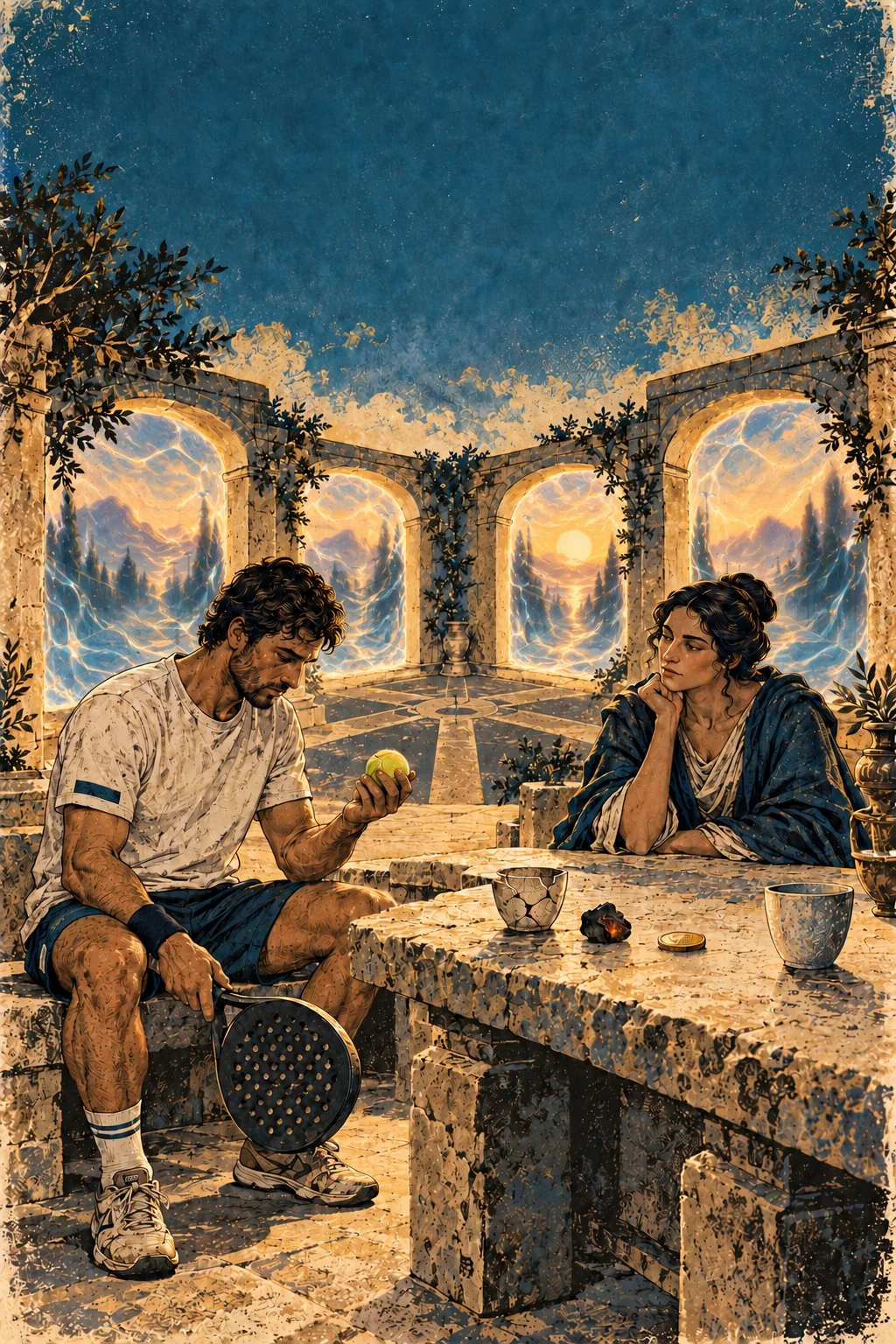
Before a final, a celebrated player arrived asking for a new weapon. His forehand had deserted him and his partner had stopped trusting him. Selene offered the racket. Ordinary. The cup. He was not thirsty. The coal was too small, the coin worthless.
“Then you have come empty-handed,” she said, “though the table is full.”
He seized all four. Coal scorched the grip; water quenched the coal; the coin rolled underfoot. His wild swing broke the cup. He blamed the tools.
Selene left the pieces where they lay. She asked for one thing he could do reliably under pressure. After a long silence, he said he could watch the ball until it reached him.
She put the plain racket in his hand.
In the match, watching gave him time to meet the ball. His return gave his partner a chance. They lost the first set and won the next two. Between those results were balls he still had to watch and returns the other player still had to make.
When he came back to the workshop, a new cup stood beside the cracked one. Selene had room on the table for both.