
Talia painted the wooden rackets green. From the path they filled the gaps among the trees. Anyone passing at a distance might think the Empress’s garden was flourishing.
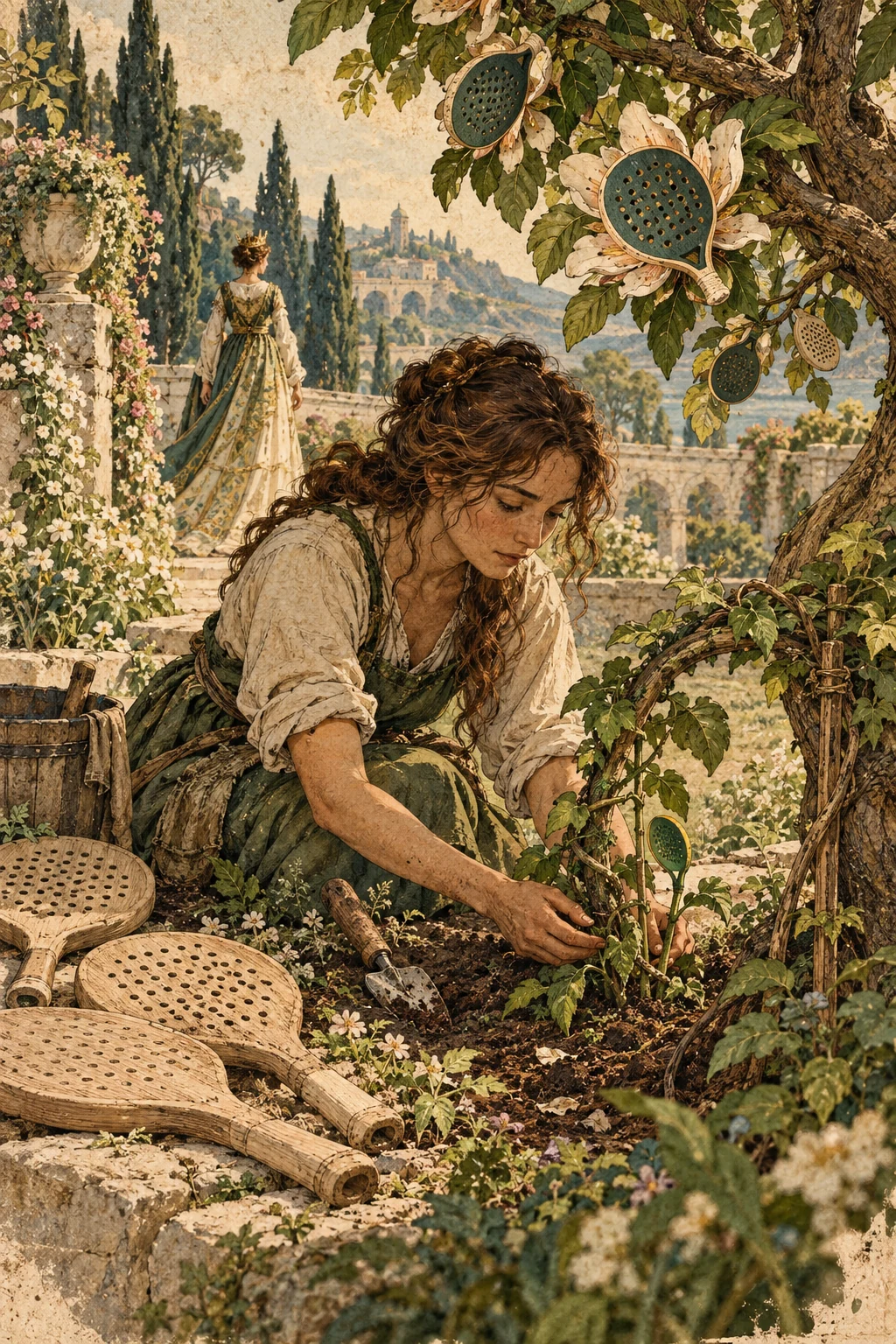
Each spring, living rackets had grown there, their faces opening like flowers, one young racket for every village court. Talia had been entrusted with them. A curled leaf troubled her; she cut it off. A late flower was dug up so she could examine its roots. She polished fruit until the skin split. The beds grew orderly, then quiet.
When the Empress returned, she knelt beside the poorest patch and put a seed in Talia’s palm. “You tried to correct what needed to be accompanied.”
For one season, Talia was forbidden to prune.
She watered and shaded. She waited through days when waiting looked like doing nothing. A crooked stem carried good fruit; a beautiful shoot failed. The vine she had dismissed climbed the broken trellis and sheltered the slowest racket tree. Talia learned to leave it there.
The next flowering was uneven. She brought the finest racket to the Empress, who told her to keep it. The garden was alive again, and its gifts could leave for the village courts.
In later tellings, Talia became a teacher known for noticing what each player needed. There was still discipline in her care. A slow beginning no longer sent her reaching for the knife.