
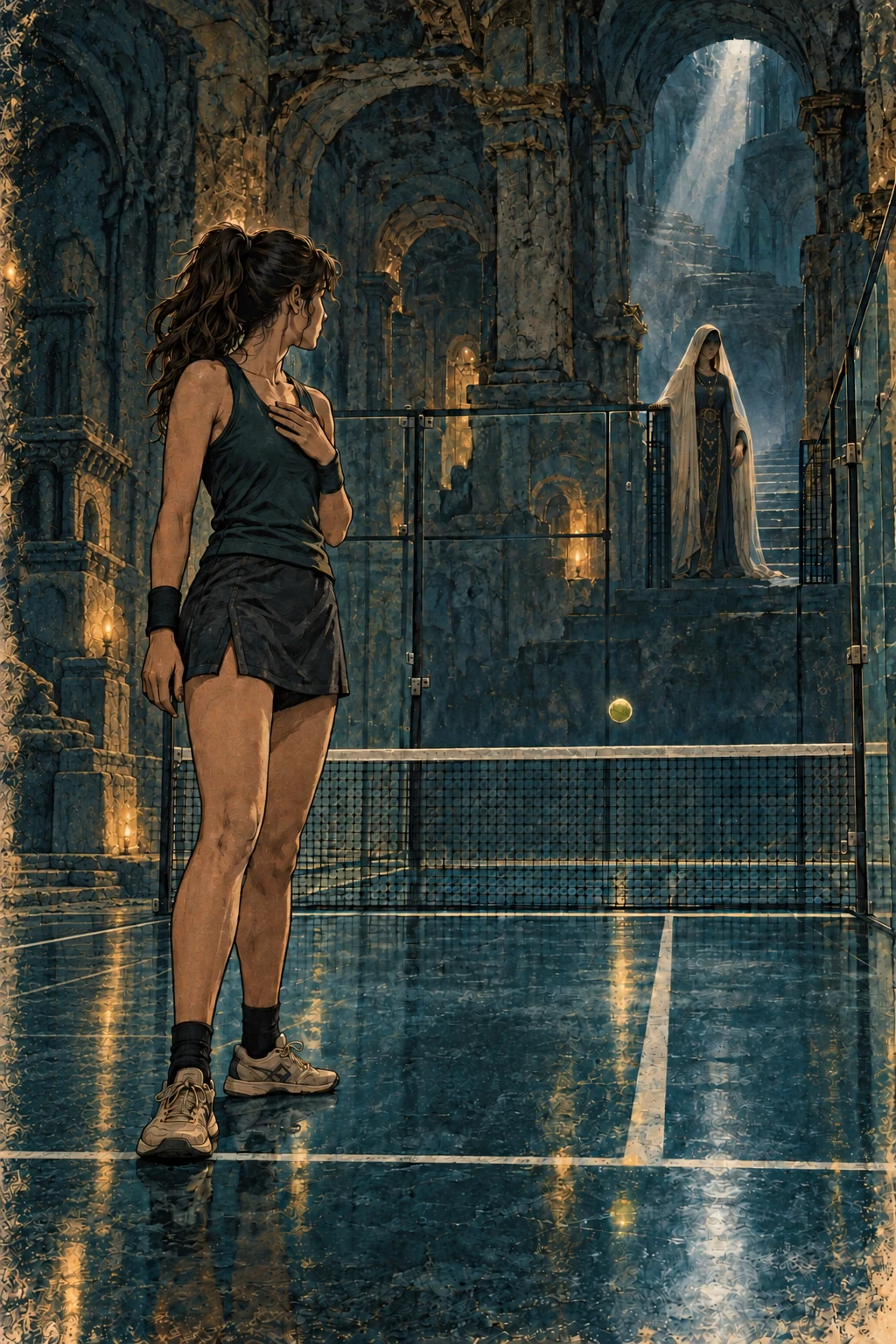
A ball hung above the net in the hidden court. Nara waited beside the veiled keeper. The corridors behind them admitted moonlight without windows. Here, beneath the oldest court, she expected at last to hear the silver bell.
Players said it rang before an important mistake. Nara had begun to find its warnings everywhere: a gull’s cry meant attack, a flickering lamp retreat. When the wind shifted, she left the middle. Sometimes this saved a point. She remembered those points whenever her partner questioned the next warning.
“Where is the bell?” she asked.
The keeper placed a hand against her chest. Nara heard her own heart. It struck faster as she waited for an answer.
They stayed. The ball stayed above the net.
Gradually other things returned to her: the step her partner took backwards when frightened; the opponent who favoured the line when rushed; her own shoulders tightening before she forced a shot. She had noticed them on an ordinary court. She could look for them there again.
Nara came back to play and kept listening. She asked of a message whether it was quiet, whether it was specific, whether reality answered it. Her partner’s call could still interrupt what she thought she knew.
Years later, students asked where the hidden court opened. “Whenever you can sit beside uncertainty without making it speak,” she told them.