
The trumpet sounded during a deciding set. Mae heard it over the court noise as her partner hesitated beside her. A winged herald stood above the broken courts with an instrument shaped from a golden racket, but Mae saw something nearer than its light: a middle ball she had already begun to claim.
She knew the rest of this point before it happened. Under pressure, her partner tightened. Mae felt abandoned and took another ball to spare them both a mistake. Her partner moved less, then less again. Each match record in Mae's bag seemed to prove she had been alone all along. The herald's call brought those old points into view like a staircase made from the same step repeated.
Mae thought she was being asked to pass judgement on her partner. She could have named every missed return. Yet nothing in the call assigned blame or offered a sentence. The ball approached, and the question was what she would do with the space between them now.
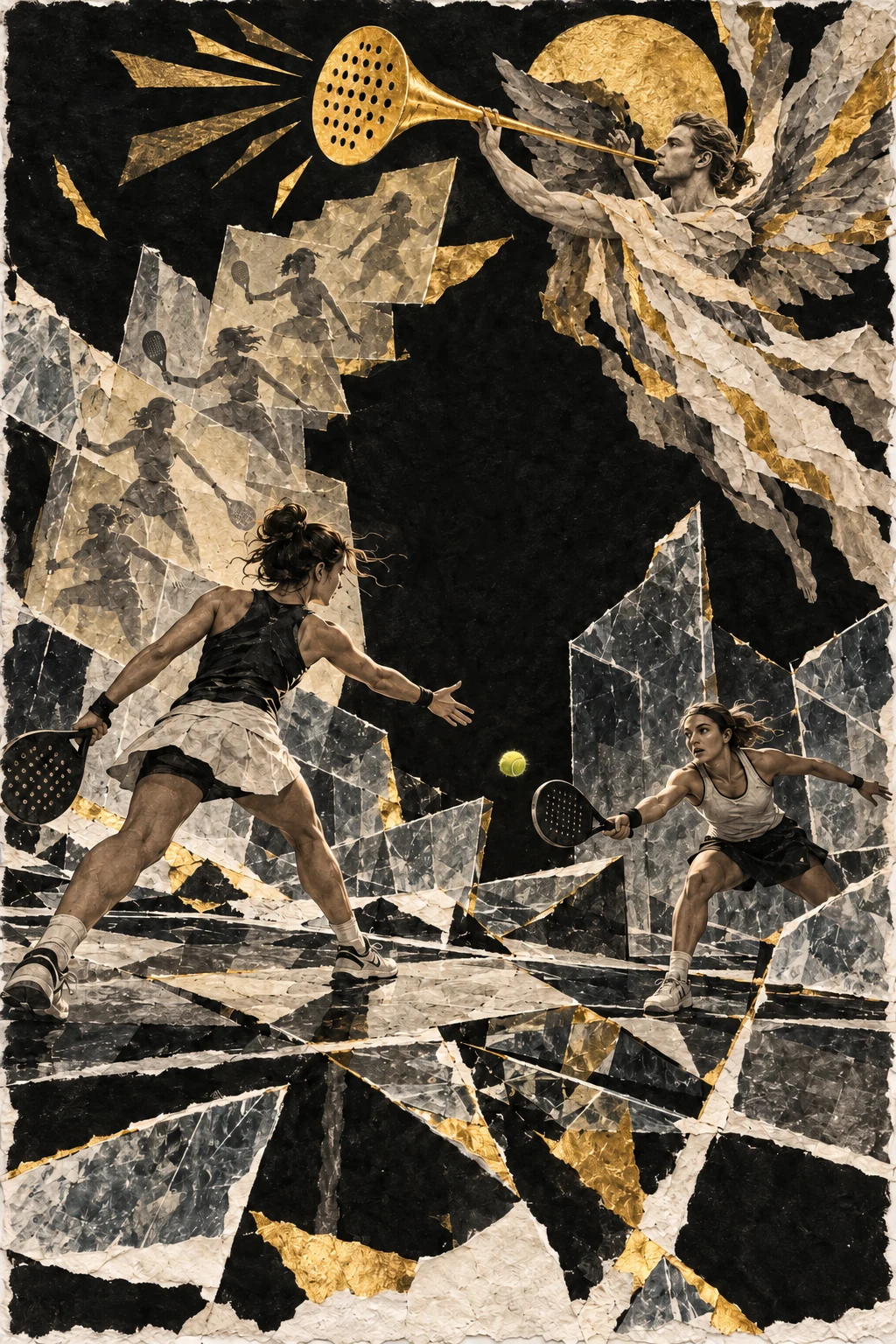
Mae stepped aside. She called for her partner to take it and said she was with her. Her partner missed. There was the old evidence, immediate and persuasive. Mae felt her arm prepare to cross in front of the next ball. She kept it at her side and called again.
Her partner reached the following return. On the third point, they moved together, neither a rescuer nor someone waiting to be rescued. The change did not win them the tournament. As they left the court, Mae could still feel the loss; she could also remember the moment she had stayed with her partner after a missed ball.
Later she asked the herald why the calling had brought no reward. It had promised none. It had made a repeated lesson clear enough for her to answer. Mae kept the old match records, but stopped reading them as a forecast. They told her where the pattern had been. They could not decide who the two players would be at the next middle ball.