
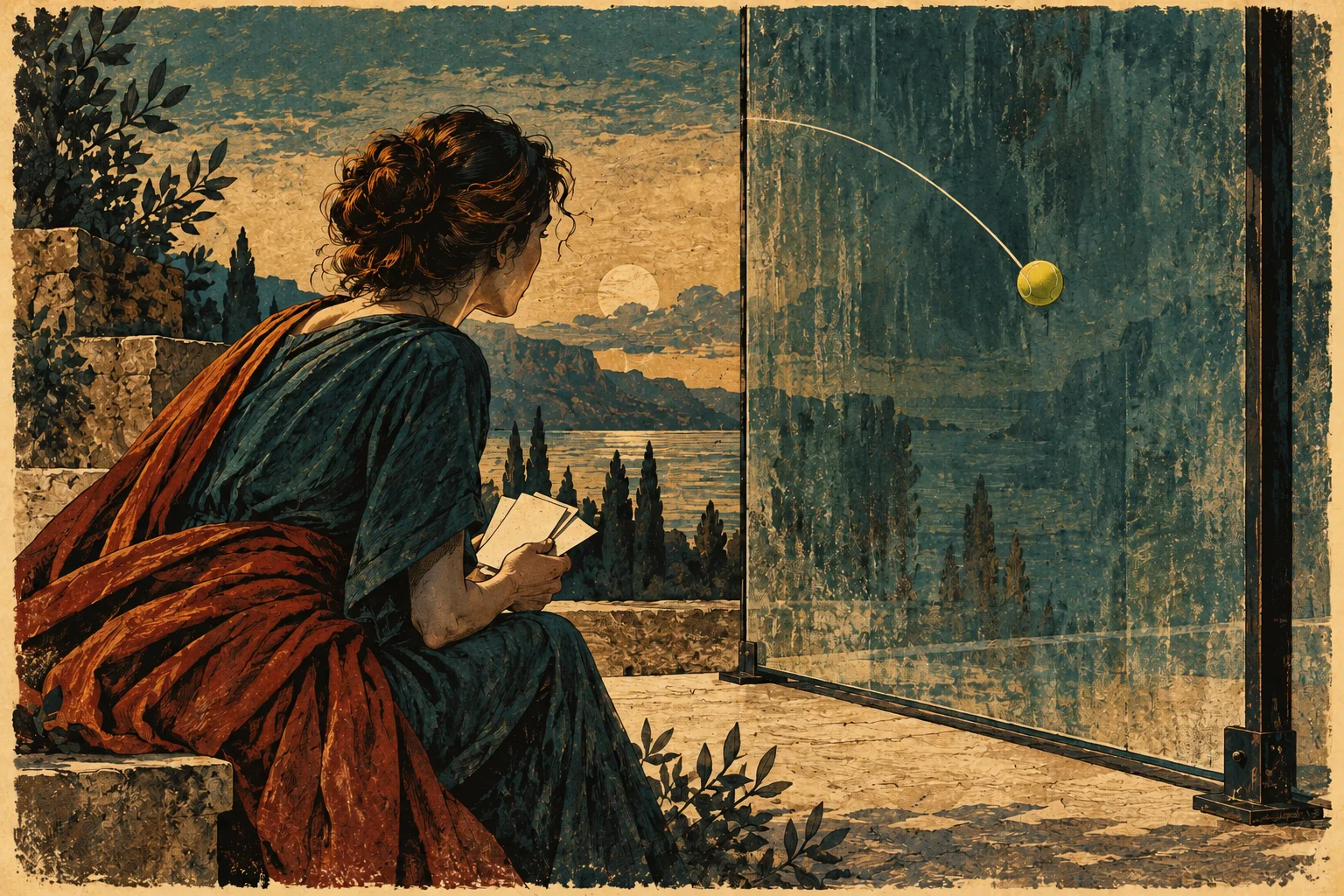
Imagine a player saying, “I was only trying to help.” Their partner has begun to hesitate before calling for a ball. The intention is easy to state. What the help became between them takes longer to describe.
The Readers of Glass begin there. They follow an action after it has met another person or circumstance, looking for the form in which it returns. Their saying is exact: “The glass returns the stroke, not the intention.”
A Glass reader might ask when the hesitation started and what each intervention made possible. The partner gets to answer. They are not merely a reflecting surface on which the first player can discover a truth about themselves.
At the card table, this attention finds echoes, reversals and apparent advantages changed by what they meet. A sending force, an alteration and a return may emerge across three cards. These are discovered roles, never fixed first, second and third positions. Light may be a return that can be received; Shadow one bent by denial, blame or repetition. Neither stays attached to a card.
Even the School’s beginnings refuse a single first cause: coastal courts, enclosed winter clubs, or anywhere somebody noticed the glass. The accounts remain in circulation together.
The danger is that a good explanation of the past can occupy the whole present. In the imagined pair, today’s hesitation might come from something new. The Doubting School asks how many ordinary returns never became memorable echoes. The Open Hand asks what choice remains once this one has been named.
A Glass reader can put those questions back into the conversation. The next stroke has not been played.