
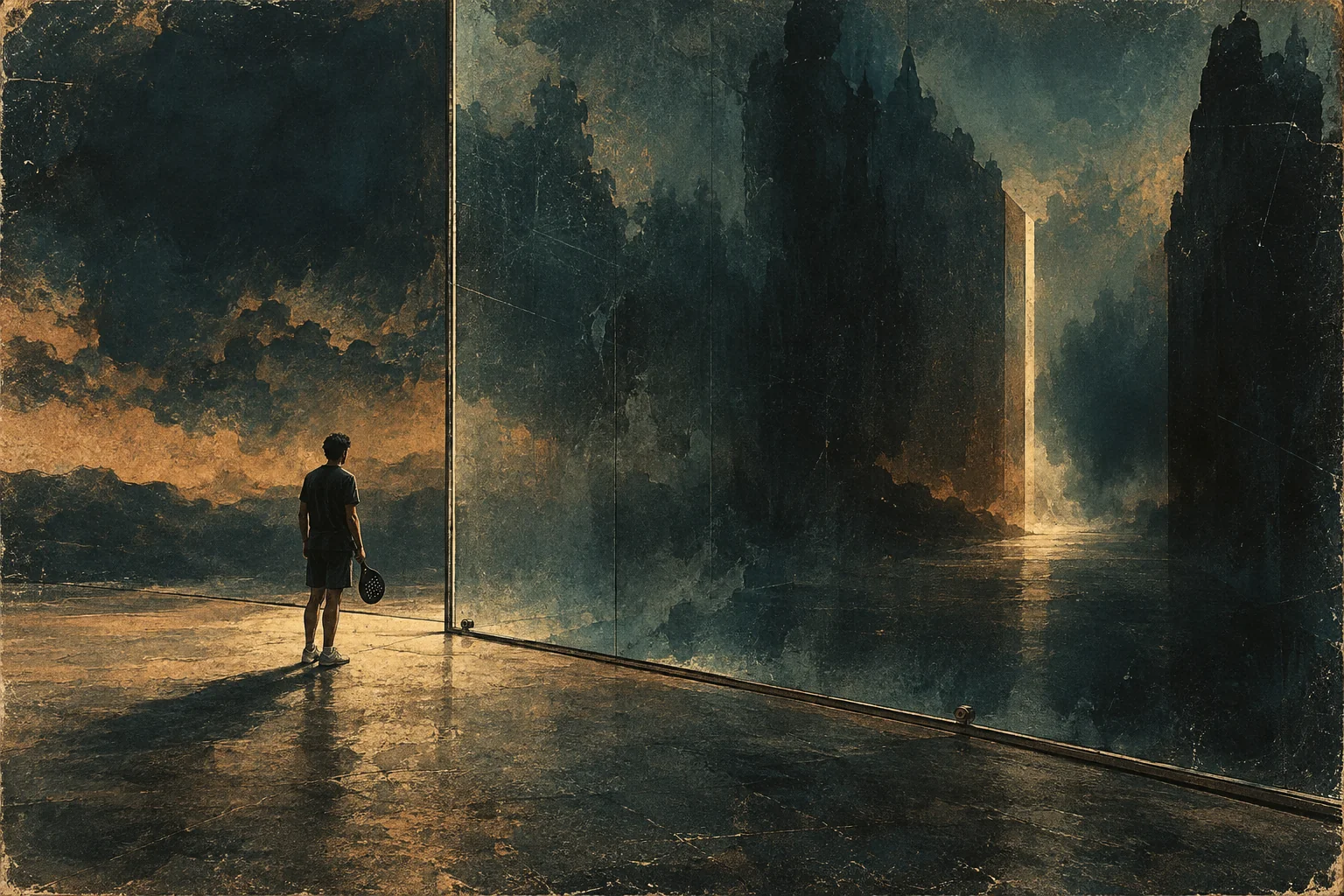
The player has already moved for the expected return. In the telling, something fails to come back as it should. Beyond the glass, the court appears to continue without them. A narrow way is visible where their familiar response can no longer take them.
Accounts call it the Passage Behind the Glass. Tales make it a route into transformation. Practical Schools recognise the instant a method stops working. The atlas keeps the place contested; no shared map resolves the difference.
Death and the Tower belong near this threshold. An arrangement can end, or a weakness become impossible to overlook, without providing a better arrangement in exchange. Threshold Askings have room for that unfinished condition.
Imagine returning to a partnership after something between you has changed. The old joke, meant to make the next point easier, no longer does. Repeating it louder will not restore its welcome. There is a pause in which a different response might begin, though neither person yet knows its shape.
The passage can name that estrangement. It cannot promise what waits beyond it. The glass remains close; the way ahead does not.