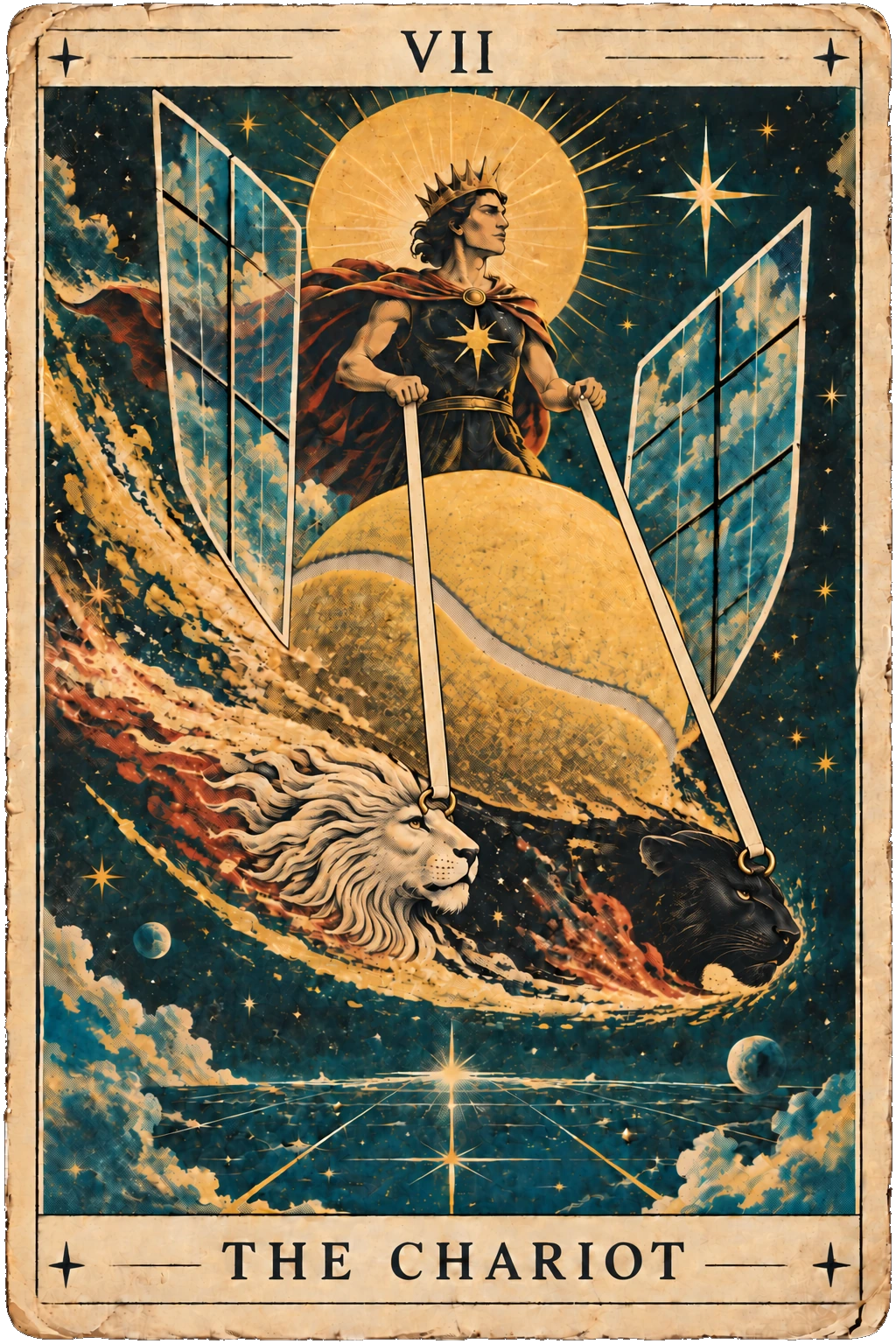
The Chariot has no ordinary wheels. A crowned navigator stands above a golden racket form, directing opposed forces through a field that seems ready to scatter them. The image is about holding a course while the energy below has more than one will.
A run of points can make a padel pair feel unstoppable. The court opens, calls come easily, and the next winner starts to appear before the opponents have hit the ball. That is often the moment when momentum needs direction rather than more speed.
One partner wants to finish each rally; the other can see a safer way to keep pressure on. The pair chooses a plan and commits to it long enough to find out what it can do. In the Chariot's light, decisiveness is shared. There is power in moving together, even when the chosen route is modest.
When the opponents answer that route, commitment need not become stubbornness. A call between points can name what has changed and give the pair a new intention. Direction is a continuing agreement, not a command issued once at the gate. The navigator has to feel what the forces below are doing.
The shadow of the card can look like impressive movement. Nervousness becomes acceleration. A player rushes through a partner's call or keeps attacking because changing pace would feel like surrender. The scoreboard may briefly reward it, which makes the confusion harder to see. Winning a point does not prove that every force was under control. Its direction is strongest while both players can still steer.