
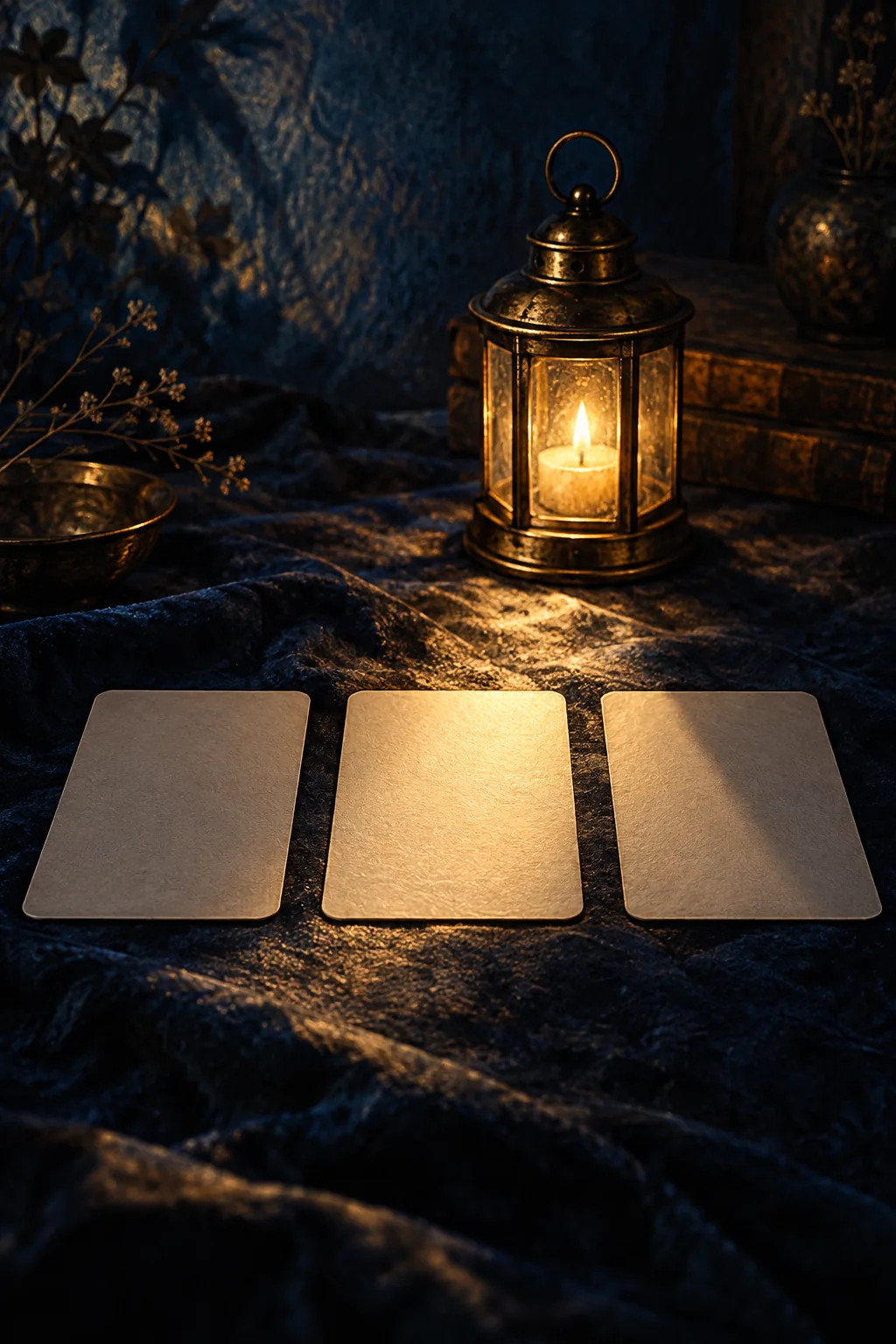
In Tales, the Lantern of the Hermit stands at the edge of the world. On a reading table, it is usually an ordinary lamp beyond the spread. Its uneven light brings one card forward and lets another recede.
Some insist that the Hermit carries it. Others give the lantern to attention itself and object to a literal bearer. The Lantern Court shares this question of light and attention; no version lights the whole of what there is to know.
Imagine a reader lowering the room’s light until the table feels wonderfully still. Their companion leans closer, then asks for the lamp to be turned up. The chosen atmosphere has made a detail harder for them to see.
The reader moves the lamp. A different part of the image comes into view, and the conversation follows it. Nothing about the School object requires the first arrangement to be preserved. Lighting is an aid, not a condition that validates the reading.
The lamp can be moved again. Both people need room in the light.