
In padel, an opponent’s ball can bounce on your side, hit the glass and still be playable. Return it before its second ground bounce. Direct contact with your glass before that first bounce is a different case.
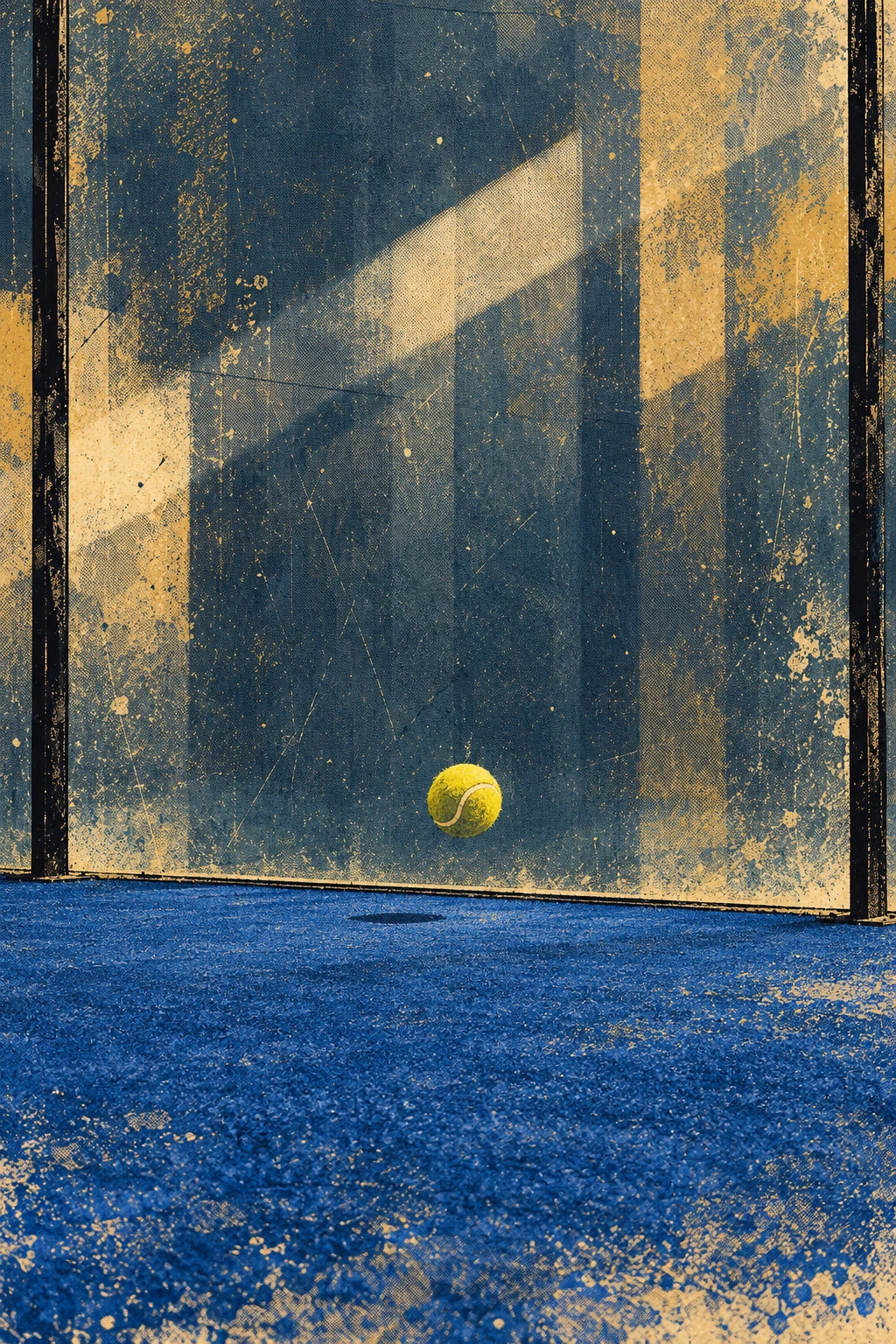
Which contact comes first?
The LTA’s rules guide explains the ordinary wall and serve distinctions. This table concerns shots played across the net into the receiving court:
| Sequence | Result |
|---|---|
| Floor, then glass | Still playable before the second floor bounce. |
| Glass before floor | The shot is out. |
| Valid service bounce, then fence | Fault if the fence is touched before the second bounce. |
| Rally bounce, then fence | Still playable; the service exception no longer applies. |
Can you hit against your own glass?
Yes: your own wall may redirect a return into the opposing court. Your own metal fence cannot be used in the same way. See FIP Rules 13 and 14 for that distinction.
Legal does not always mean useful
The LTA’s back-glass guide explains how a rebound can create time and why incoming speed and position matter. Letting a ball pass is a choice to read its rebound, not permission to stop moving. The wall does not give you an extra floor bounce.
For the first shot of a point, also see return-of-serve rules. For the human difficulty of waiting, imagine the return below.
The ball comes back
Imagine a player new to that return. The ball is travelling past her, and everything she recognises says she is late. She reaches for a shot she can barely make. Later, in a similar point, she lets it reach the glass. What had been moving away is now coming back.
The pause has a limit
The Hanged Man gives this reversal a place in the Oracle. His surrender is chosen: an insistence released so that another view can appear. For the player, the familiar demand to meet the ball immediately has loosened. She still has to judge this ball, find room and make contact.
Waiting can also become an explanation for doing nothing. In another imagined point, she leaves the return too long and the second bounce ends it. The glass has offered no rescue. A useful pause and a missed opportunity can feel similar until their consequences arrive.
She collects the ball. The return she is learning has a shape now: floor, glass, another chance to meet it. The wall belongs to the game she is playing, even when it interrupts the game she expected.