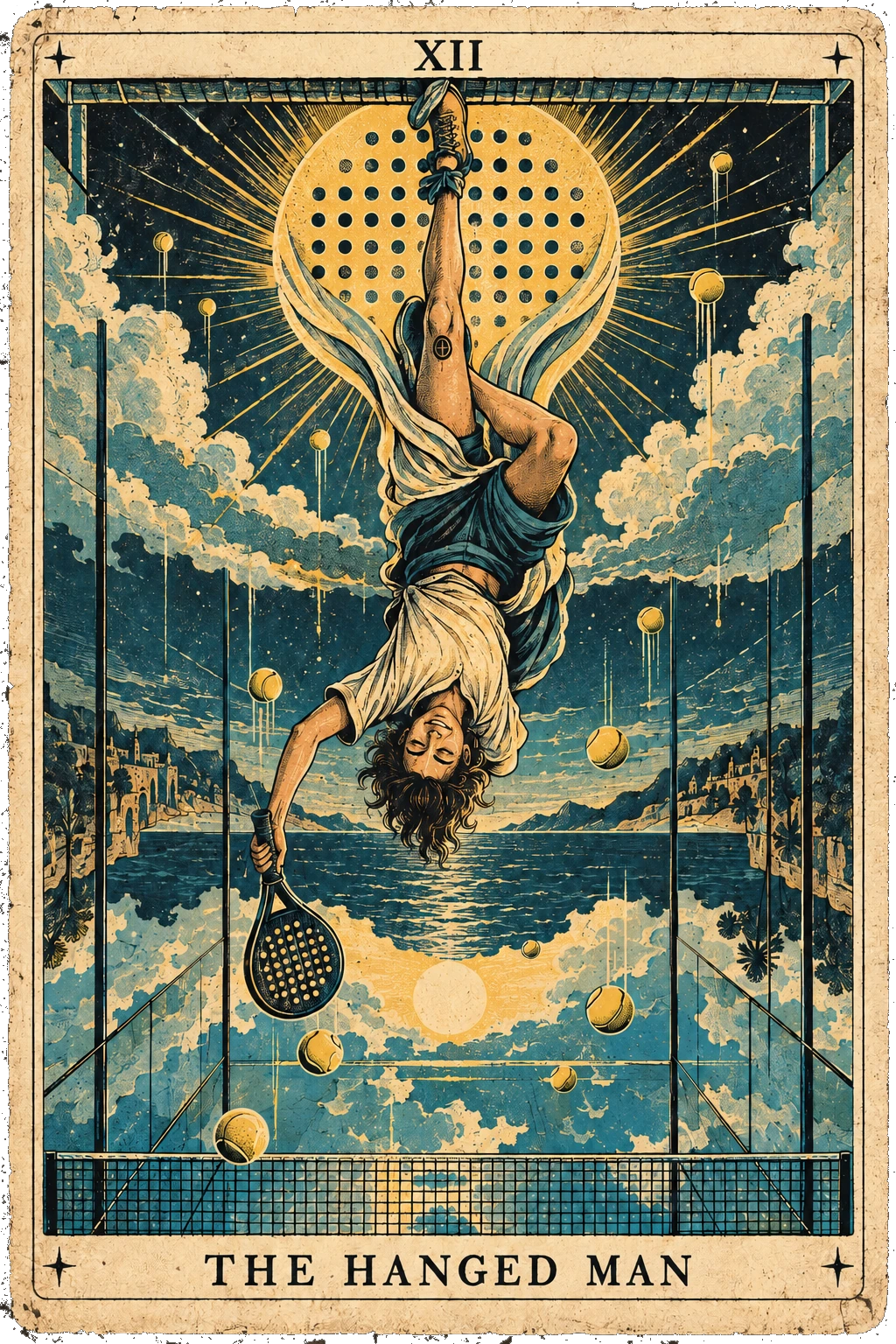
Try looking at the court upside down. In the Hanged Man's card, a willing figure passes through a perforated golden disc while sky, water and playing surface trade places. Balls seem to rise or fall according to which side you have decided is upright. Nothing has moved on your own court, but the old description of it may no longer be enough.
The same padel answer has failed three times. On the fourth ball, you reach for it again. A familiar shot or pace can feel like part of your identity, especially when a partner is watching. Slowing the rally may cost you the appearance of decisiveness. That is a real cost, even if the change would help.
Suspension makes room to notice what effort has hidden. Perhaps the pair keeps attacking a point that asks for patience, or you have called a choice “safe” because you cannot bear to try another. For a while the old answer has lost its authority and no new one has earned it. The discomfort belongs to the change of view.
Try a small experiment instead of announcing a new philosophy of play. Let one return travel higher, or ask your partner what they saw from the other side of the rally. The point may still be lost. A changed view is not a guarantee of a better result, but it can release you from proving the old answer again.
The figure in the card has consented to the inversion. That choice gives the pause its dignity. Sometimes a player cannot stop because a match is in progress, but they can stop insisting that the familiar interpretation is the only one. The experiment begins as a change in attention before it becomes a change in technique.
Waiting can become its own performance. You leave every adjustment to a partner, call yourself surrendered, and never risk a new decision. The Hanged Man's inversion is chosen; it is not a beautiful name for helplessness. What happens if you let the old answer fail without racing to replace it?