
Imagine a reading in which one image remains difficult to explain. The person across the table has found a conversation they want to have. An Open Hand reader can let them go without making the last symbol a condition of departure.
Recognition matters here because it may loosen what happens next. Light and Shadow ask how a force widens or narrows freedom, contact and honest response; they do not award moral worth. An interpretation returns to a choice, a question or a conversation, rather than a verdict imposed by the cards.
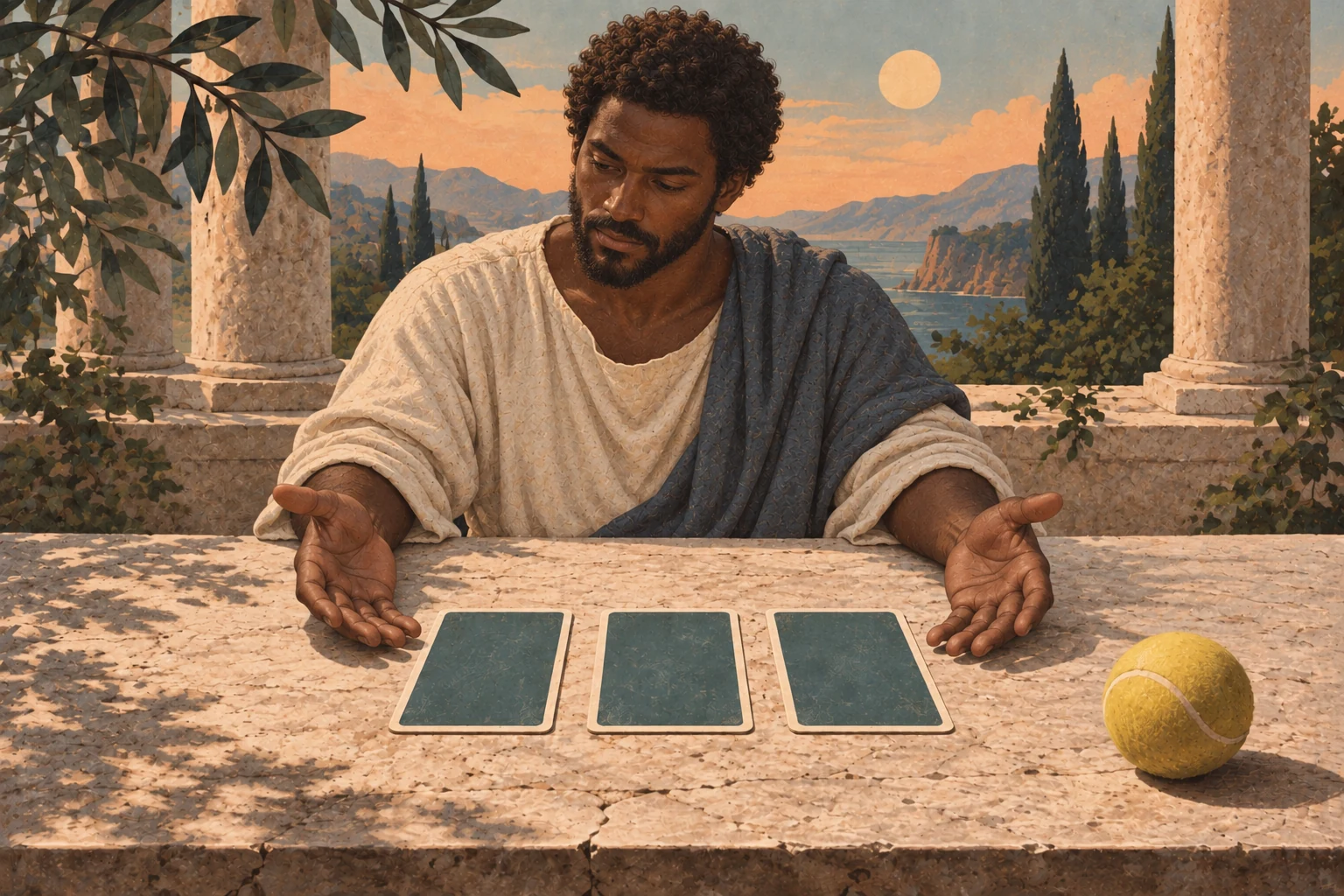
The School denies having a founder. One Tale nevertheless remembers a reader opening both hands at the end of each consultation. Some see proof that no card was concealed. Others say the reader is showing that nothing belonging to the questioner has been kept.
An ending can also come too quickly. What if the person needs time to grieve rather than another possible action? What if chance or material circumstances have closed the choice the reader finds most attractive?
Readers of Glass ask whether a consequence has been faced. Night Readers ask whether a meaning has been hurried into usefulness. The Open Hand remains open to these objections when it names the limit as carefully as the available movement.
The imagined visitor leaves with a conversation in mind. The cards stay on the table. What happens next will involve another person, who has not yet answered.