
Some endings are recognizable only because the thing ending was once good. A doubles partnership might have brought friendship, wins and a way of belonging to padel. It can still reach a season in which the old roles no longer carry either player.
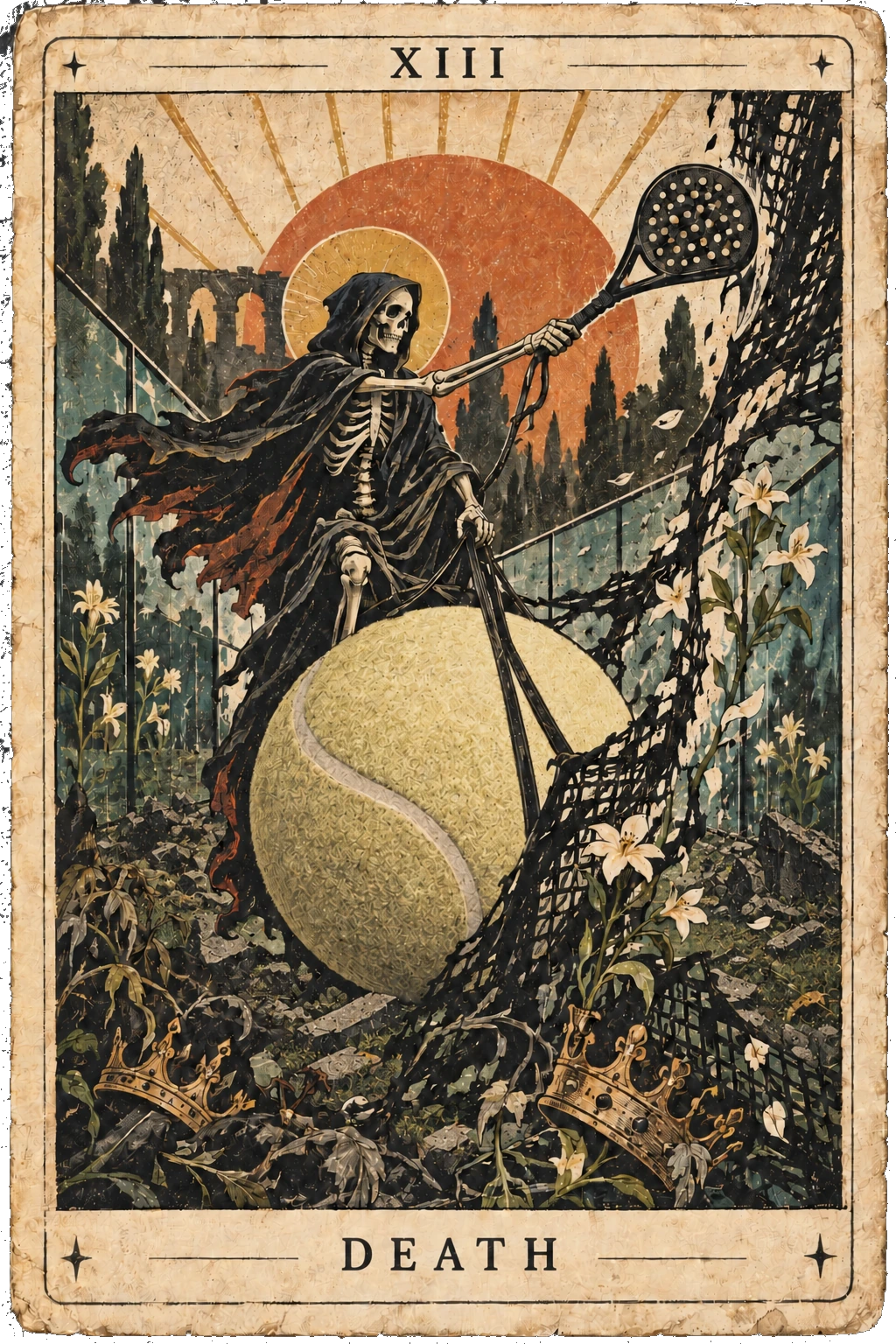
On the Death card, a black-cloaked skeleton crosses fractured court ground with a racket held like a processional emblem. A pale ball sits among the ruins, birds move in the distance, and little white flowers have begun to appear. The figure is travelling through what remains. Nothing in the scene says the previous court was worthless.
A style of play learned for an earlier level may have done its work. A habit that protected one player may now narrow the pair. A conversation repeated after every match can itself become the way to avoid a more difficult conversation. To name completion honestly is to acknowledge the value of what is being released as well as its limit.
There may be no ceremonial last game. A role can end in increments: one player begins taking a ball they used to leave; a partnership meets less often; an old strategy is quietly retired. The absence of a dramatic event does not make the change unreal. Grief can accompany a chosen ending, especially when the former way gave you a place in the game.
The opposite impulses are both tempting. Hold on so tightly that every failure is called an exception; or cut something off because it has become uncomfortable and a dramatic change would feel cleaner than patient attention. Death asks for a true ending, not a spectacle. It predicts neither literal harm nor an inevitable new beginning for a person reading this page.
You do not have to know the new form yet. A true ending leaves room for gratitude without requiring the former way to keep going.