
Familiar guidance has run out. In the widely told accounts, that is how a player reaches this remote court. Directions that once seemed sufficient have brought them here and cannot tell them how to continue.
A lantern often appears beyond its boundary. Nobody agrees who carries it. The light is clearer in the telling than the person behind it.
A place to be alone
Hermit tales describe chosen solitude: enough distance from inherited advice to hear what the player has been unable to hear among other voices. The empty space is a relief. No one is asking for an immediate answer.
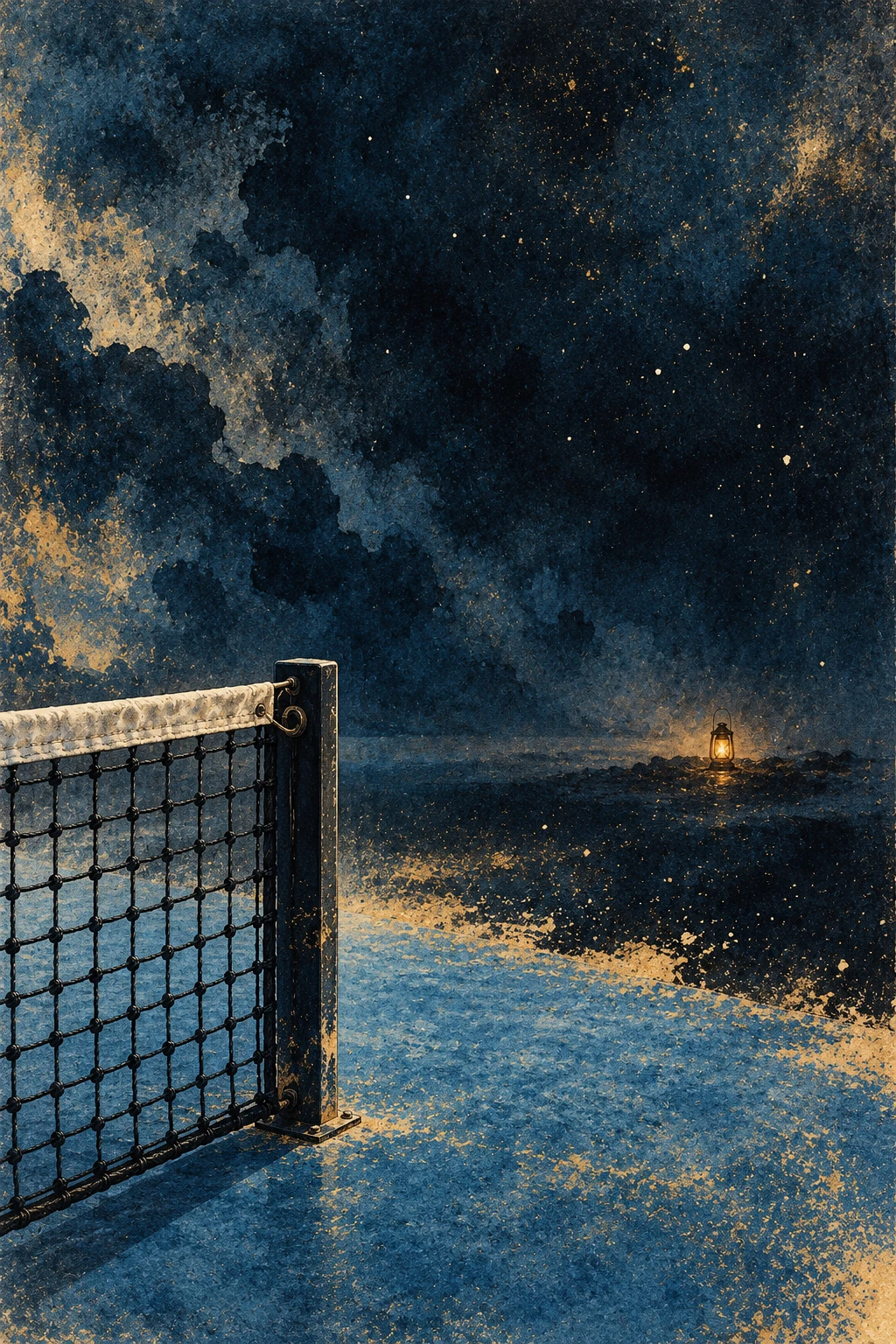
A place to leave
Other versions call the same remoteness exile. A player has gone beyond the reach of people who might help, and the task is to find a route back. In those accounts, being alone has stopped making the world clearer.
The Hermit, the Star and the Horizon Asking gather at this edge. A light can offer orientation without deciding which of these two stories is being lived.
Think of someone taking an evening away from the club after advice has become a noise. The quiet may give them room. It may also show how much they miss one particular voice. Tomorrow they might return with a question they could not ask before.
The lantern belongs to the accounts. Whether it marks a farther path or a way home remains open.